This one-day Kanazawa itinerary covers the city’s classic sights in a single loop: the Nagamachi samurai district, the Nishi Chaya geisha district, the Teramachi temple quarter, and, to finish, Kenrokuen Garden and Kanazawa Castle Park. It is a Hub Day, so your bags stay at the hotel, and every stop is on the Kanazawa Loop Bus left-loop route or a short walk from it.
Along the way, this guide covers Oyama Shrine, the Nomura Samurai Residence, lunch in Nishi Chaya, Myoryuji (the “Ninja Temple”), and dinner at Kanazawa Station, with an hour-by-hour plan from 9:00 to about 18:20 and notes on the bus pass, tickets, and opening hours. Higashi Chaya and Kazuemachi are left out on purpose: they fit into the evening of the Takayama to Kanazawa transfer day.
Morning: Oyama Shrine and Nagamachi
Kanazawa’s main sights are spread out, and the loop bus links most of them. The stops below follow the left-loop route in the order you would visit them.
Getting around: the Kanazawa Loop Bus and day pass
The Kanazawa One Day Pass gives unlimited rides on the loop bus and most local Hokutetsu buses for one day. This plan rides the bus only three times (¥660 at ¥220 a ride), so the pass is worth it only if you add a fourth ride. It is not sold on board, so decide before you set off.
- Price: ¥800 adult / ¥400 child, valid for one calendar day (single ride ¥220 adult / ¥110 child)
- Where to buy: the bus information centre outside Kanazawa Station’s east exit, any Hokutetsu ticket office, or the Norimasshi Kanazawa app (on sale from three days ahead; activate it on the morning you start and show the screen to the driver as you get off)
- Not valid on: the Kanazawa Light-Up Bus; on the Asanogawa Line it covers only as far as Kamimoroe Station
Oyama Shrine
 Photos: PHOTO AC
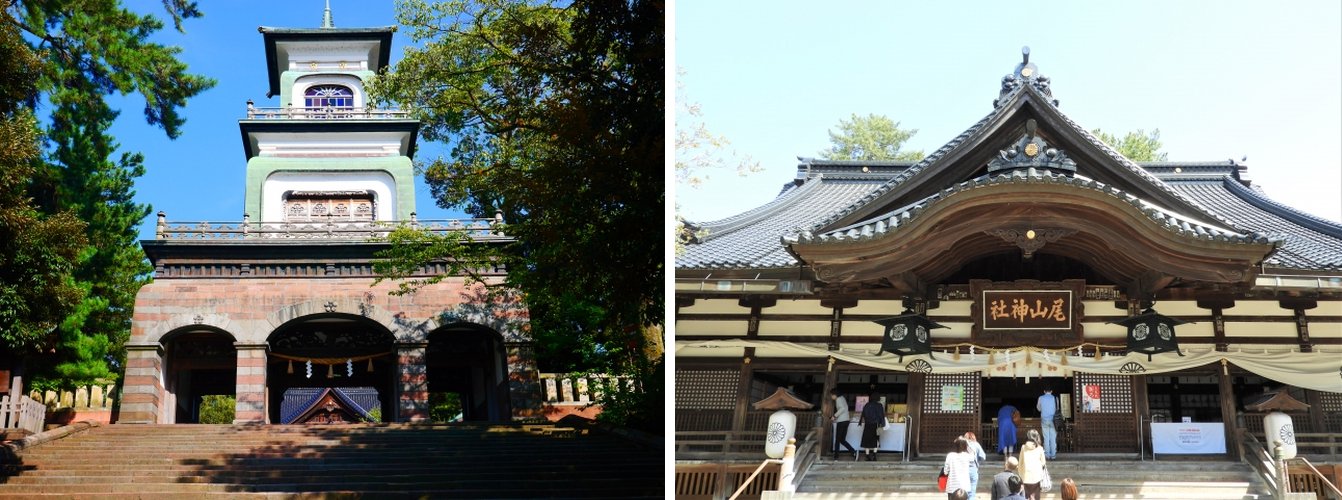
The left loop reaches Oyama Shrine (Oyama Jinja, 尾山神社) in about 8 minutes from Kanazawa Station. It is dedicated to Maeda Toshiie, founder of the Kaga Domain. The highlight is the three-story Shinmon Gate. It blends Japanese, Western, and Chinese styles and is a National Important Cultural Property. Behind the shrine, a small strolling garden with ponds and bridges makes a quiet start to the day.
Kanazawa Ashigaru Museum
 Photos: Kanazawa City
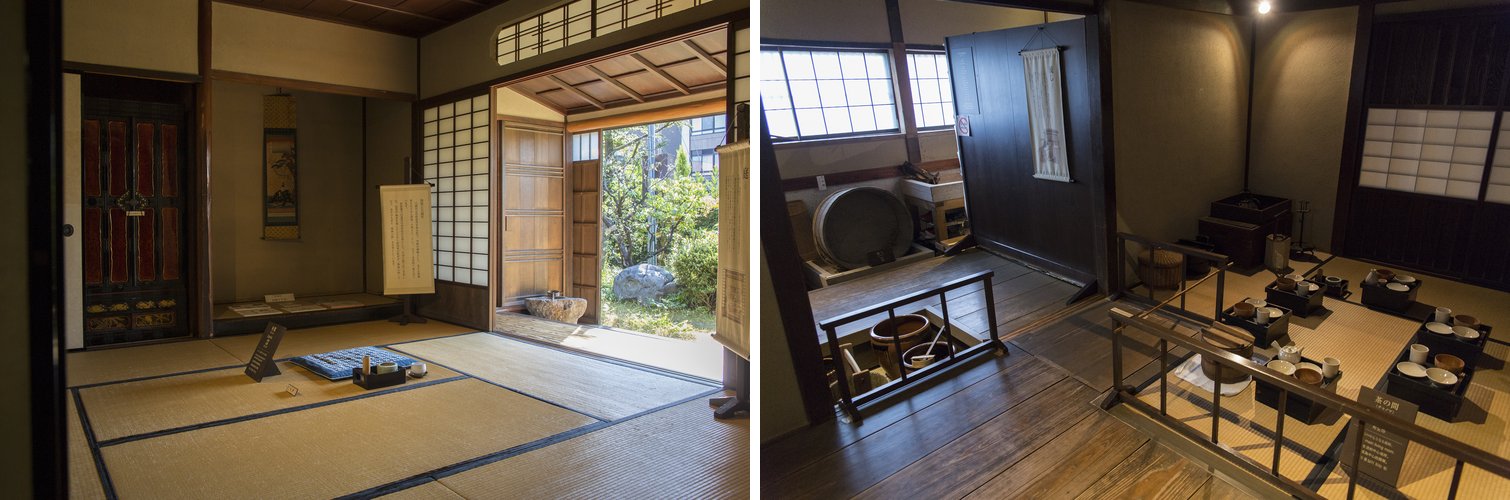
Kanazawa Ashigaru Museum (Ashigaru Shiryokan, 金沢市足軽資料館) is a small museum about an 11-minute walk west, on the edge of the Nagamachi district. It preserves two restored ashigaru (foot soldier) houses from the Edo period. The exhibits cover the daily life, duties, and side jobs of the lower-ranking samurai who served the Kaga Domain.
- Admission: free
- Hours: 9:30 – 17:00
Nagamachi Samurai District
 Photos: Kanazawa City
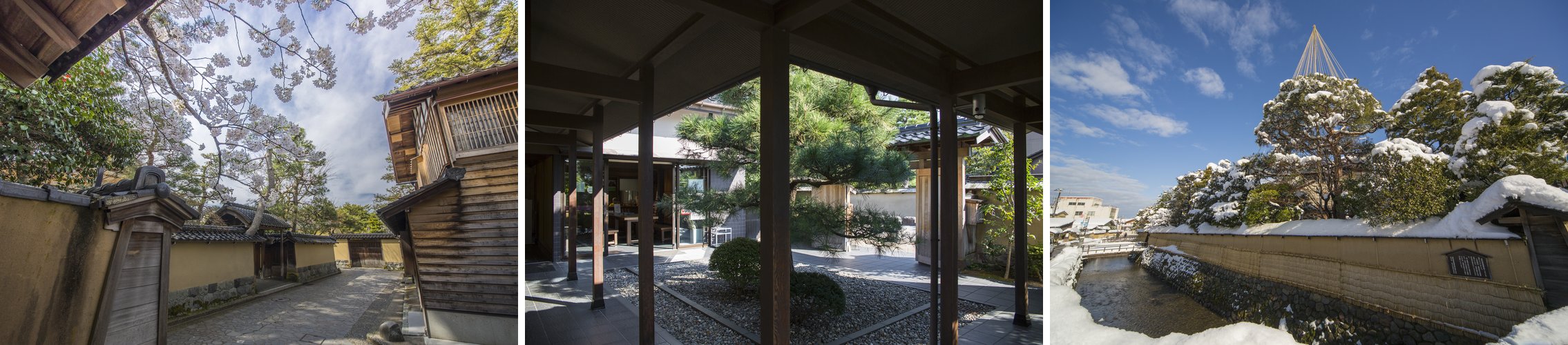
From the museum, a few minutes’ walk along the Onosho canal brings you to the heart of the Nagamachi Samurai District (長町武家屋敷跡). It is one of Kanazawa’s best-preserved neighborhoods: former samurai residences, earthen walls, and stone-paved lanes, with clear water channels running beside the streets. The whole quarter is protected as a conservation area, so the Edo-period feel survives intact.
Wander the alleys, look in at the Nomura Samurai Residence, and stop at one of the cafes along the canal.
In winter the district looks different from the rest of the year. On the first weekend of December, straw mats called komo are hung over the earthen walls to protect them from Kanazawa’s heavy, wet snow, and they stay up until mid-March.
If you have a few minutes, drop in at the Nagamachi Buke Yashiki Rest House (長町武家屋敷休憩館). It is free, and its quiet courtyard garden around a single pine makes a good place to sit down. Inside are a small exhibit corner, restrooms, and maps of the district. Volunteer guides from the city’s “Maidosan” group are based here and will walk you around Nagamachi for free, pointing out details that are easy to miss on your own.
- Admission: free
- Hours: 9:00 – 17:00 (from 9:30, Dec 1 – Mar 15)
Nomura Samurai Residence
 Photos: Kanazawa City
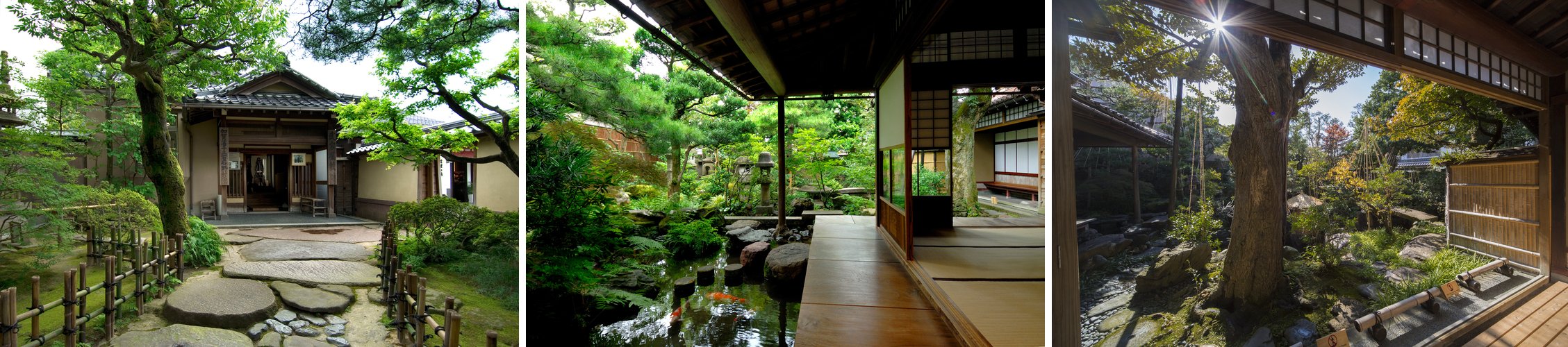
Beside the Onosho canal stands the Nomura Samurai Residence (武家屋敷跡 野村家), the only former samurai house in Nagamachi open to the public. The Nomura family served the Maeda family in senior positions for generations. Inside are Edo-period rooms, sliding-door paintings by official Kaga Domain artists, and displays of swords and armour.
The highlight is the award-winning garden — flowing water, prized stones, and a 400-year-old bayberry tree. You can take matcha and a sweet in the second-floor tea room looking out over it.
- Admission: ¥550 adult; matcha and a sweet in the tea room ¥300 extra
- Hours: 8:30 – 16:30 (later closing in summer)
Midday: Nishi Chaya and Lunch
 Photos: Kanazawa City
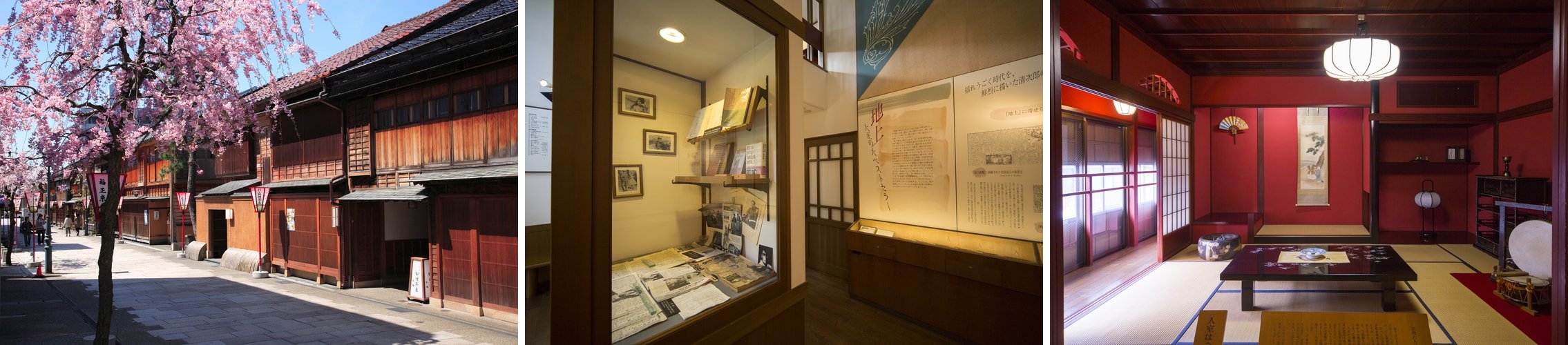
From Nagamachi it is about a 20-minute walk, or a short hop on the left loop, south across the Sai River to the Nishi Chaya District (にし茶屋街). This is the smallest of Kanazawa’s three geisha districts. It has the same preserved two-story teahouses and fine latticework as Higashi Chaya, but far fewer visitors, so the streets stay quiet. There are cafes, confectioners, and a small free museum with a recreated teahouse interior.
Lunch and Tea Break
- Yusura (桜桃 -ゆすら-) — a calm cafe in Nishi Chaya with a courtyard garden, known for its katsu sandwich and for Kanazawa dishes such as hanton rice and Kanazawa curry (closed Wednesdays).
- Banrai (ばん莱) — seasonal local cooking and fresh sushi in a converted machiya townhouse.
- Rakugan Moroeya Nishi-Chaya Karyo (落雁諸江屋 にし茶屋菓寮) — a confectionery shop with more than 170 years of Kaga wagashi craft, best known for rakugan, a pressed sugar-and-rice-flour sweet.
For more choice, Kanazawa’s main dining and nightlife quarter, Katamachi, is about a 5-minute walk back across the Sai River and is packed with restaurants and shops.
Kanazawa Nishi Chaya Museum
The Kanazawa Nishi Chaya Museum (Nishi Chaya Shiryokan, 金沢市西茶屋資料館) stands on the site of the former Yoshiyonero teahouse, the childhood home of the Taisho-era (1912–1926) novelist Shimada Seijiro. The ground floor covers his life and work. Upstairs is a recreated teahouse interior: lacquered furnishings, a vermilion guest room, folding screens, and traditional instruments.
- Admission: free
- Hours: 9:30 – 17:00
Ninja Weapon Museum
The Ninja Weapon Museum (忍者武器ミュージアム), also in Nishi Chaya, is a fun, family-friendly stop with around 160 authentic ninja and samurai artifacts — shuriken (throwing stars), sickles, and samurai armour — plus a practice area where both adults and children can try throwing shuriken.
- Admission: ¥800 adult / ¥700 student / ¥400 child (under 12); under 3 free
- Hours: 10:00 – 17:00
Afternoon: Teramachi Temple Area
 Photos: PHOTO AC, Ishikawa Prefectural Tourism League
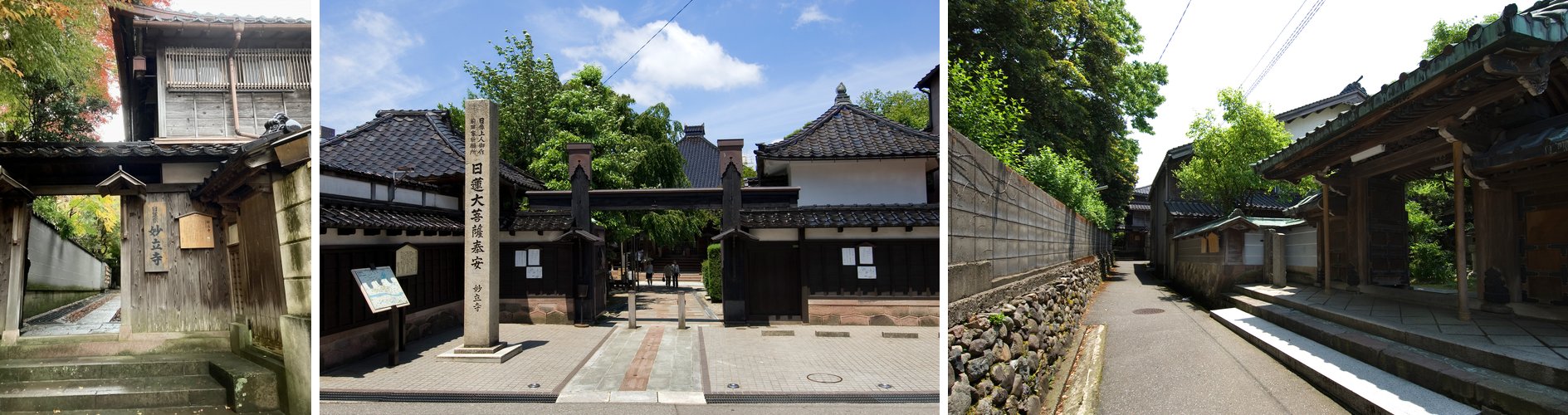
Just a short walk from Nishi Chaya is the Teramachi district, where around seventy temples stand close together — the name literally means “temple town.” Most are working temples rather than sights, but a few reward a look, and the quiet after the chaya district has its own appeal.
They are spread along and behind the main street, so rather than hunt for them one by one it is easier to walk a single cluster. Gannenji (願念寺), Kogan-in (弘願院), Myoryuji (妙立寺), Honchoji (本長寺), and Shoshoji (承証寺) all sit within a few minutes of each other, and you can see the gates and grounds of all five in under an hour. Only Myoryuji has an interior open to visitors, and only by reservation.
Myoryuji Temple
Myoryuji — widely known as the “Ninja Temple” — looks like a two-story building. Inside it hides seven levels, around two dozen rooms, and a warren of trick staircases, hidden rooms, and a pit trap under the offering box.
The maze was defensive. If Kanazawa Castle ever came under attack, the Teramachi temples were meant to form a line of defense, with Myoryuji as a forward stronghold. That design is what earned the temple its nickname.
You can walk the grounds freely, but the inside is guided-tour only and must be booked by phone. Reservations open one month ahead, tours are in Japanese only, and children under school age are not admitted.
- Admission: grounds free; main hall (guided tour) ¥1,200 adult / ¥800 elementary, cash only
- Hours: 9:00 – 16:00
- Reservations: 076-241-0888 (8:30 – 17:00)
Late Afternoon: Kenrokuen and Kanazawa Castle Park
From the Hirokoji stop (on the left loop, near the Teramachi and Nishi Chaya districts) it is about 12 minutes by bus to the Kenrokuenshita stop. Kenrokuen and Kanazawa Castle Park sit right next to each other, each with several separate sights inside.
Official guides suggest around 90 minutes for Kenrokuen and 120 for the castle park to see everything; this plan sticks to the best-known spots and allows about an hour for each. From October 16 to the end of February both close at 17:00, so on those shorter days it pays to be selective.
Kenrokuen Garden
 Photos: Kanazawa City, Ishikawa Prefectural Tourism League
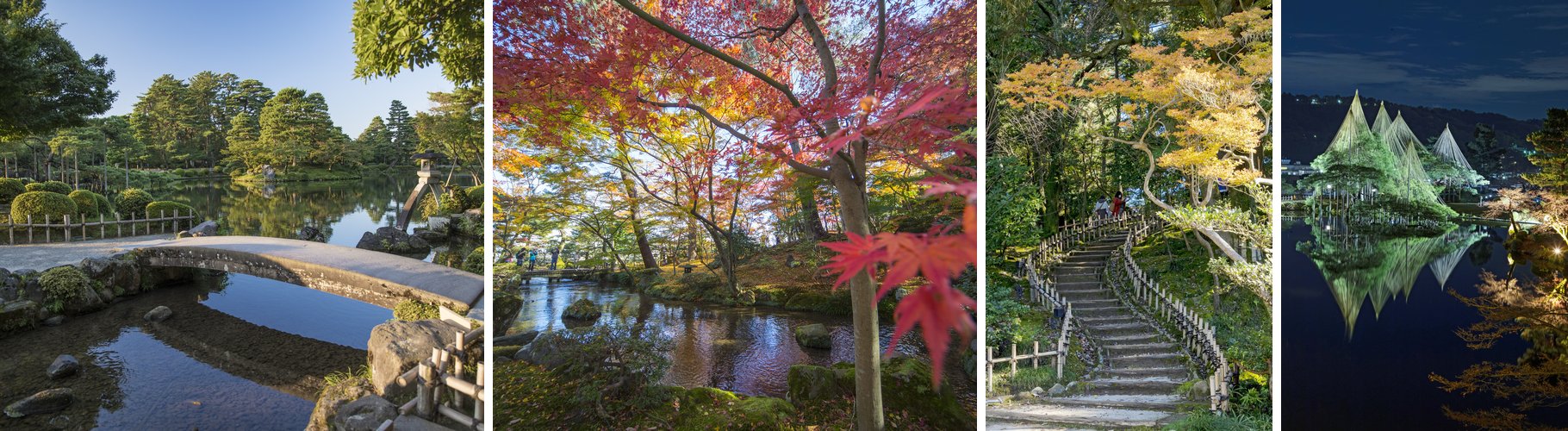
Kenrokuen (兼六園) is one of Japan’s three great landscape gardens, built up by the Maeda family over several centuries. It is a strolling garden: paths, ponds, teahouses, and views composed so that the scene changes as you walk.
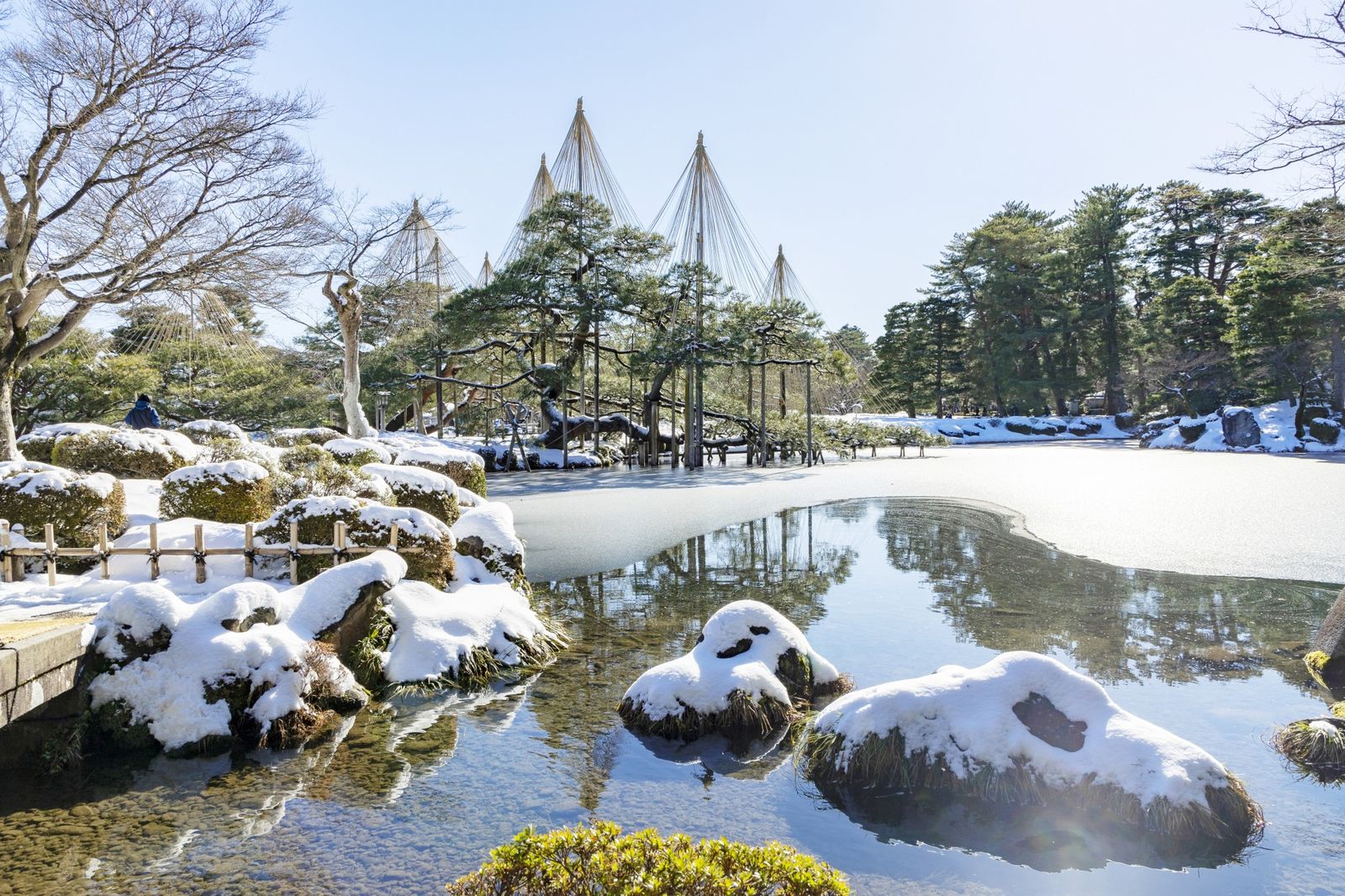
The best-known sights ring Kasumigaike Pond. The two-legged Kotoji-toro, a stone lantern, is Kenrokuen’s symbol and its most photographed spot. Beside it stands the sprawling Karasaki Pine, famous for the yukitsuri ropes rigged over its branches each winter. Nearby, the gourd-shaped Hisagoike Pond holds small islands drawn from Japanese legend.
Kenrokuen is worth visiting in any season — cherry blossom in spring, autumn colour, and snow scenery in winter.
- Admission: ¥320 adult / ¥100 child
- Hours: 7:00 – 18:00 (Mar 1 – Oct 15); 8:00 – 17:00 (Oct 16 – end Feb)
Kanazawa Castle Park
 Photos: Kanazawa City
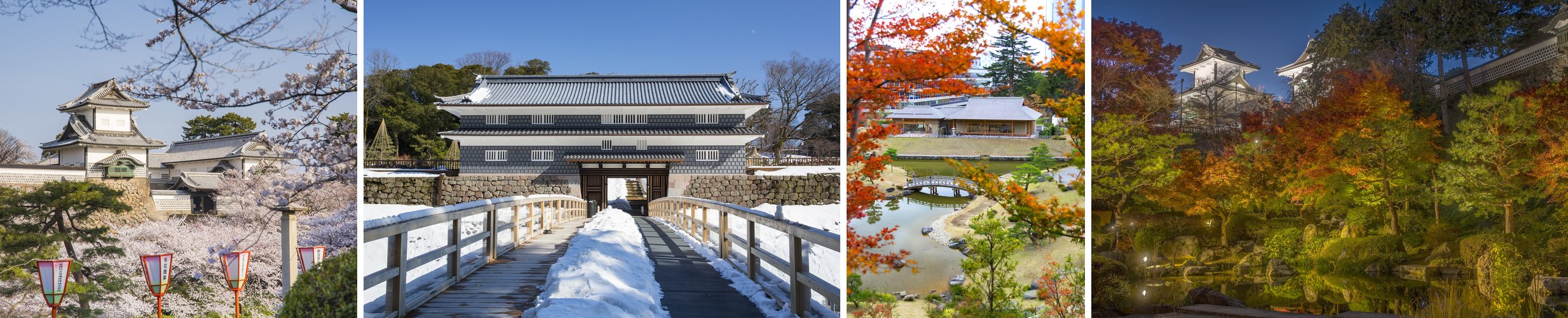
Kanazawa Castle Park (金沢城公園) is the former seat of the Maeda family, who ruled the Kaga Domain for over 280 years. Reconstructed buildings stand on the old grounds: the Hishi Yagura turret, the Gojukken Nagaya storehouse, and the Ishikawa Gate, with their pale stone walls and white lead-tiled roofs. If you want to go inside the Hishi Yagura and Gojukken Nagaya, head there first: last entry is 16:00, and this plan reaches the park at about 15:50.
On the far side from Kenrokuen is the restored Gyokusen’inmaru Garden, which is lit up on some evenings.
Next to the garden is the Nezumita Gate (Nezumita-mon, 鼠多門), a two-story gate rebuilt in 2020 together with its wooden bridge, about 140 years after the original burned down. Unlike the castle’s other gates, its tiled lower walls have joints finished in black rather than white. The bridge crosses to the grounds of Oyama Shrine, so this is where the day’s route comes full circle.
- Admission: grounds and Gyokusen’inmaru Garden free; the Hishi Yagura / Gojukken Nagaya buildings ¥320 adult / ¥100 child
- Hours: same as Kenrokuen; the paid buildings 9:00 – 16:30 (last entry 16:00)
- Seasonal notes: the day works in any season. Winter is the quietest, and from December to mid-March the Nagamachi walls wear their straw komo. From October 16 to the end of February, though, Kenrokuen and the castle park close at 17:00 and daylight is short, so start early and cut a stop if you are running behind.
- Backup rainy-day options: the Nomura Samurai Residence, the Ashigaru Museum, the Nishi Chaya Museum, the Ninja Weapon Museum, and (if you have booked) Myoryuji’s main hall are all indoors; Kenrokuen and Kanazawa Castle Park are the open-air part of the day, so trim those first in heavy rain.
Evening: Kanazawa Station and Dinner
 Photos: PHOTO AC, Ishikawa Prefectural Tourism League
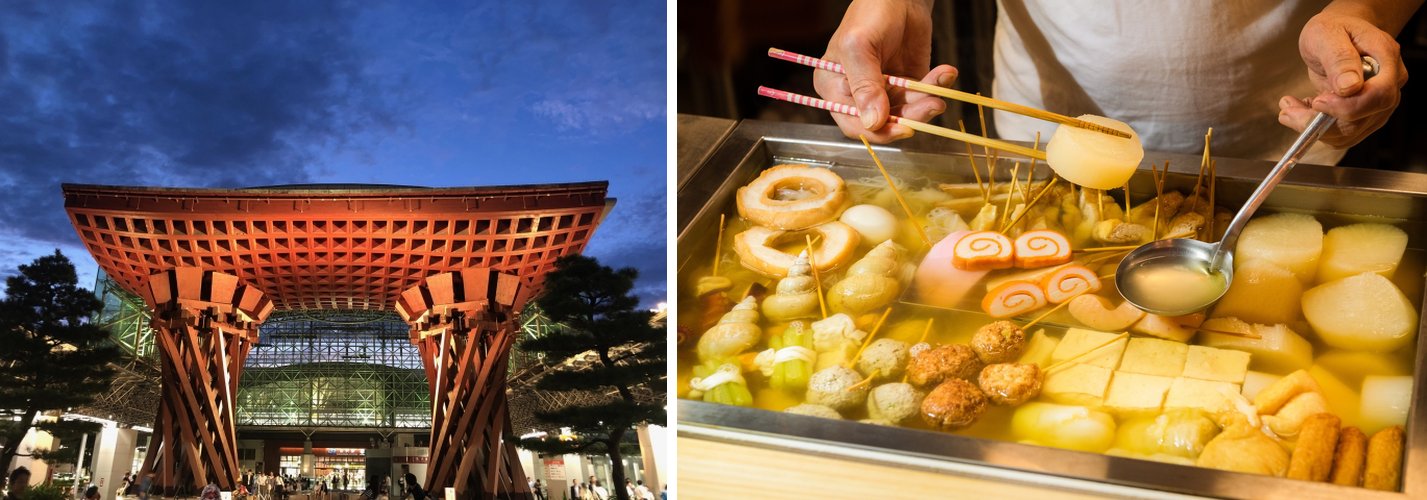
From the Kenrokuenshita stop it is about 15 minutes on the left loop back to Kanazawa Station, where the Hyakubangai shopping complex has plenty of places to eat. Two well-known spots for local food:
- Kanazawa Nikushokudo Hyakubangai (金沢肉食堂 百番街店) — a meat restaurant specializing in Noto beef, Ishikawa’s own wagyu brand, which is rarely found outside the prefecture. It is grilled on an iron plate and served as a set meal or rice bowl, with wine or sake to go with it.
- Kisetsu Ryori Oden Kuroyuri (季節料理・おでん 黒百合) — Kanazawa-style oden in a dashi broth that has not changed in more than 70 years, plus seasonal dishes, local specialties such as jibuni and Hakusan firm tofu, and a wide range of local sake.
Time-Block Itinerary
Start: Kanazawa hotel
End: Kanazawa hotel (same hotel — this is a Hub Day)
| Time | Stop | Line | Notes |
|---|---|---|---|
| 09:00 | Depart hotel (near Kanazawa Station) to Oyama Shrine | Loop Bus (left loop) | ¥220 (or day pass ¥800), ~8 min |
| ~09:08 | Oyama Shrine | — | About 30 min |
| 09:38 | Oyama Shrine → Kanazawa Ashigaru Museum | — | ~11 min walk |
| ~09:50 | Kanazawa Ashigaru Museum | — | About 30 min |
| 10:20 | Kanazawa Ashigaru Museum → Nagamachi Samurai District | — | ~3 min walk |
| ~10:23 | Nagamachi Samurai District | — | About 30 min |
| 10:53 | Nagamachi Samurai District → Nomura Samurai Residence | — | ~3 min walk |
| ~10:56 | Nomura Samurai Residence | — | About 30 min |
| 11:26 | Nomura Samurai Residence → Nishi Chaya District | — | ~20 min walk, or ~5 min bus |
| ~11:45 | Lunch in Nishi Chaya | — | About 60 min; Katamachi (~5 min walk) has more choice |
| 12:45 | Nishi Chaya District → Kanazawa Nishi Chaya Museum | — | ~1 min walk |
| ~12:46 | Kanazawa Nishi Chaya Museum | — | About 15 min |
| 13:01 | Kanazawa Nishi Chaya Museum → Ninja Weapon Museum | — | ~1 min walk |
| ~13:02 | Ninja Weapon Museum | — | About 30 min |
| 13:32 | Ninja Weapon Museum → Teramachi Temple Area | — | ~5 min walk |
| ~13:37 | Teramachi Temple Area | — | ~50 min on foot, then ~6 min walk to the Hirokoji stop |
| 14:33 | Teramachi Temple Area to Kenrokuen Garden | Loop Bus (left loop) | ¥220, ~12 min |
| ~14:45 | Kenrokuen Garden | — | About 60 min |
| 15:45 | Kenrokuen Garden → Kanazawa Castle Park | — | ~5 min walk |
| ~15:50 | Kanazawa Castle Park | — | About 60 min, then ~15 min walk to the Kenrokuenshita stop |
| 17:05 | Depart Kanazawa Castle Park to Kanazawa Station | Loop Bus (left loop) | ¥220, ~15 min; park closes 17:00 Oct 16 – end Feb |
| ~17:20 | Dinner | — | Kanazawa Station, about 60 min (see the Evening section) |
| ~18:20 | Return to hotel | — | End of day |
Transport Notes
- The Kanazawa Loop Bus left loop (green “LL” buses) links all of today’s stops in order: Oyama Shrine, Nagamachi, Nishi Chaya and Teramachi, then Kenrokuen and Kanazawa Castle Park. The right loop (red “RL” buses) runs the same circuit the other way.
- Nagamachi, Nishi Chaya, and Teramachi are close enough to walk between once you are in that part of town; save the bus for the longer hops out to Kenrokuen and back to the station.
- Myoryuji’s grounds need no booking. If you want to see inside, the main hall is guided-tour only and reservations open a month ahead — phone as early as you can (076-241-0888); same-day entry works only if a slot is still free.
Cost and Ticket Notes
- Kanazawa Loop Bus: ¥220 adult / ¥110 child per ride; day pass ¥800 adult / ¥400 child.
- Kanazawa Ashigaru Museum: free. Nishi Chaya Museum: free.
- Nomura Samurai Residence: ¥550 adult; matcha and a sweet in the tea room, ¥300 extra.
- Ninja Weapon Museum: ¥800 adult / ¥400 child.
- Myoryuji (Ninja Temple) main hall: ¥1,200 adult / ¥800 elementary, cash only, guided tour by reservation.
- Kenrokuen: ¥320 adult / ¥100 child.
- Kanazawa Castle Park: grounds and Gyokusen’inmaru Garden free; the Hishi Yagura / Gojukken Nagaya buildings ¥320 adult / ¥100 child.
- Budget for: about ¥660 in bus fares (or ¥800 with a day pass) and about ¥2,000 in admissions (Nomura ¥550, Ninja Weapon Museum ¥800, Kenrokuen ¥320, castle buildings ¥320), plus lunch, a sweet stop, and dinner (see the Evening section). The tea-room matcha (¥300) and Myoryuji’s guided tour (¥1,200) are extra.
This day pairs well with:
- Takayama to Kanazawa Transfer Day — the day before, arriving at the same Kanazawa hotel
- Kanazawa to Toyama Transfer Day — the day after, continuing on toward Toyama via Takaoka