This day moves the trip on from Kanazawa to Toyama by local train, but not in one hop. The 60-kilometre ride is split into short legs, with stops in Takaoka, on the Amaharashi Coast, and in the old port town of Fushiki before you reach Toyama in the early afternoon. You carry your bags along and drop them at the Toyama hotel, so there is no going back for luggage.
Along the way, this guide covers Takaoka’s Doraemon Promenade, Great Buddha, and Zuiryuji Temple, the Amaharashi Coast and its seaside cafe, Shokoji Temple in Fushiki, and Toyama Castle and the free City Hall Observatory, plus where to stay near Toyama Station and five places for dinner. Every train on the route takes IC cards, and the whole day costs about ¥1,900 in fares.
- Early Morning: Kanazawa to Takaoka
- Morning: Takaoka
- Late Morning: Amaharashi Coast and Lunch
- Midday: Fushiki and Shokoji Temple
- Afternoon: Takaoka to Toyama
- Where to Stay (in Toyama)
- Late Afternoon: Toyama Castle and City Hall Observatory
- Evening: Toyama Station and Dinner
- Time-Block Itinerary
- Transport Notes
- Cost and Ticket Notes
Early Morning: Kanazawa to Takaoka
 Photos: PHOTO AC
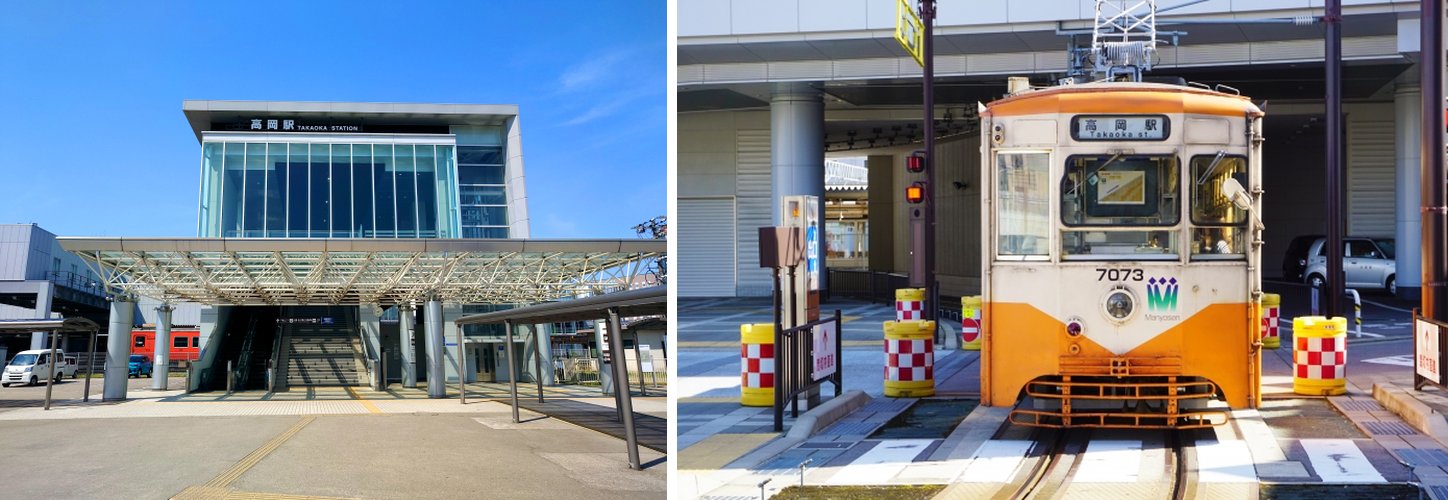
Takaoka, about 40 minutes east of Kanazawa by local train, is the first stop of the day. The town was founded in 1609 by Maeda Toshinaga, the second lord of the Kaga Domain, who built a castle here and brought in metal casters to start a local industry. That casting tradition still defines Takaoka, which is known across Japan for its copper and bronze ware — and it shows in two of this morning’s sights. Takaoka is also the hometown of Fujiko F. Fujio, the creator of Doraemon.
You carry your luggage today and leave it at the Toyama hotel in the afternoon. If you would rather sightsee without it, Takaoka Station has coin lockers in small, medium, and large sizes: on the second floor next to the tourist information centre outside the ticket gates, and on the first floor by the Manyosen tram stop. You pay by cash or IC card, and since you come back through Takaoka at 13:16, you can collect your bags on the way to Toyama.
IR Ishikawa Railway and Ainokaze Toyama Railway
 Photos: PHOTO AC
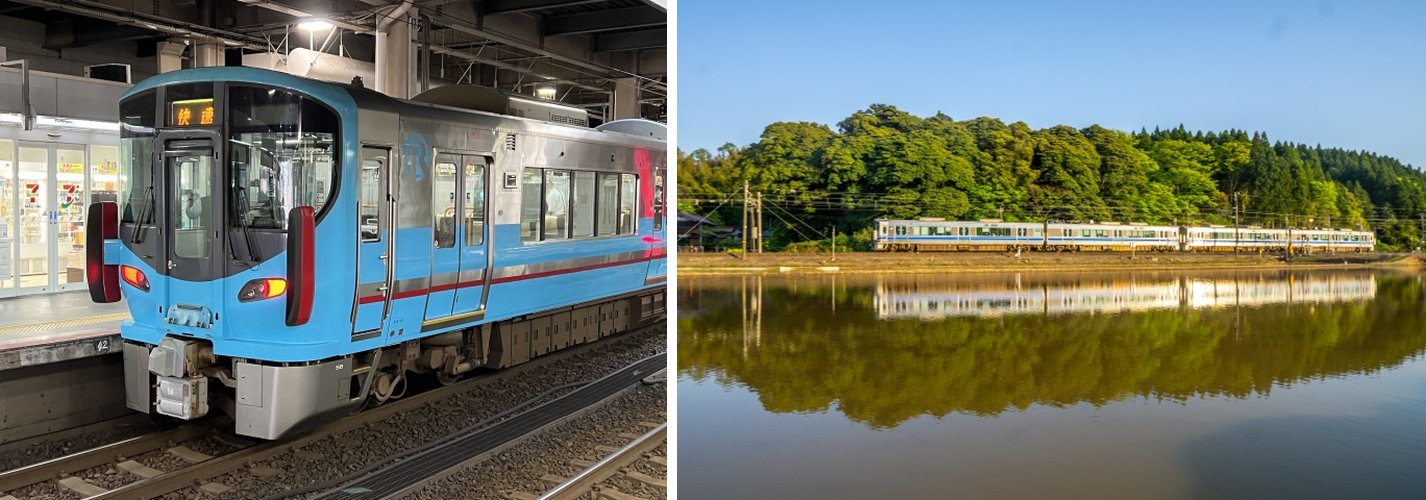
The old main line between Kanazawa and Toyama is now run by two local companies rather than JR: IR Ishikawa Railway on the Kanazawa side and Ainokaze Toyama Railway on the Toyama side. Many trains run straight through from one company’s line to the other, so the ride to Takaoka needs no change. Fares from both companies are added together, and you can pay with an IC card such as ICOCA or Suica, or buy a ticket at the station machines.
- Fare: ¥870 adult (¥370 IR Ishikawa + ¥500 Ainokaze), about 40 min
- IC cards: ICOCA and other nationally compatible cards accepted
This itinerary assumes the 07:16 local train from Kanazawa, which runs through to Kurobe.
| Train | Kanazawa Departs | Takaoka Arrives | Duration |
|---|---|---|---|
| Local (for Kurobe) | 07:16 | 07:57 | 41 min |
Before you go: these are not JR trains, so the Japan Rail Pass does not cover the Kanazawa to Takaoka leg. See the Transport Notes for which parts of the day it does cover.
Morning: Takaoka
 Photos: PHOTO AC
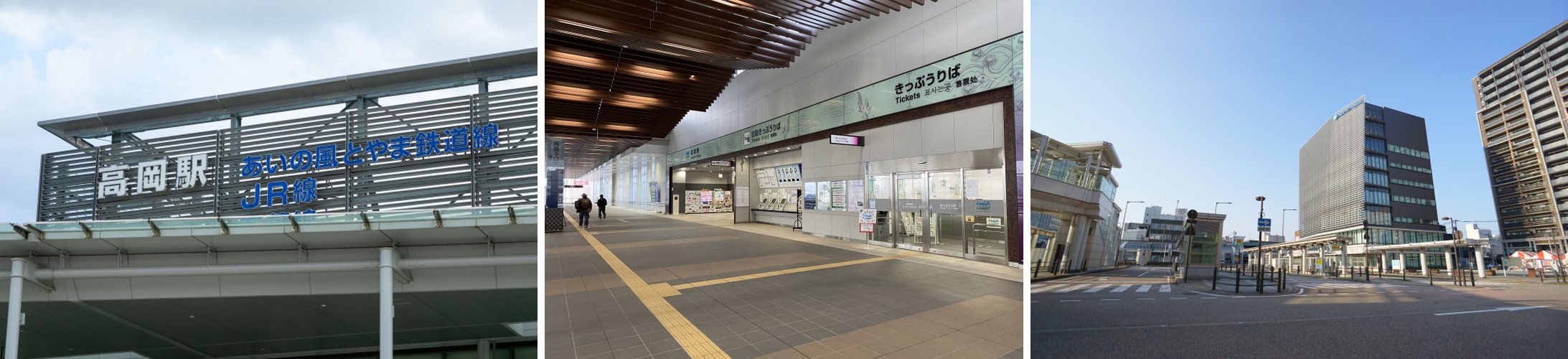
This morning’s three sights make a loop on foot from Takaoka Station. The Doraemon statues are right outside, the Great Buddha is 10 minutes north, and Zuiryuji Temple is on the south side of the tracks. From Zuiryuji it is a short walk back to the station for the 9:43 train to the coast.
Doraemon Promenade
The Doraemon Promenade (Doraemon no Sanpomichi, ドラえもんの散歩道) is a row of bronze statues in the Wing Wing Takaoka plaza, about 3 minutes from the station. Twelve figures about a metre tall show Doraemon, Nobita, Shizuka, Gian, Suneo, and Dorami, two of each, cast using Takaoka’s bronze-making skills. Next to the Doraemon statue is a message from Fujiko F. Fujio himself. A visit takes only a few minutes and costs nothing, and children love it.
Takaoka Great Buddha
 Photos: © Takaoka Tourism Navi
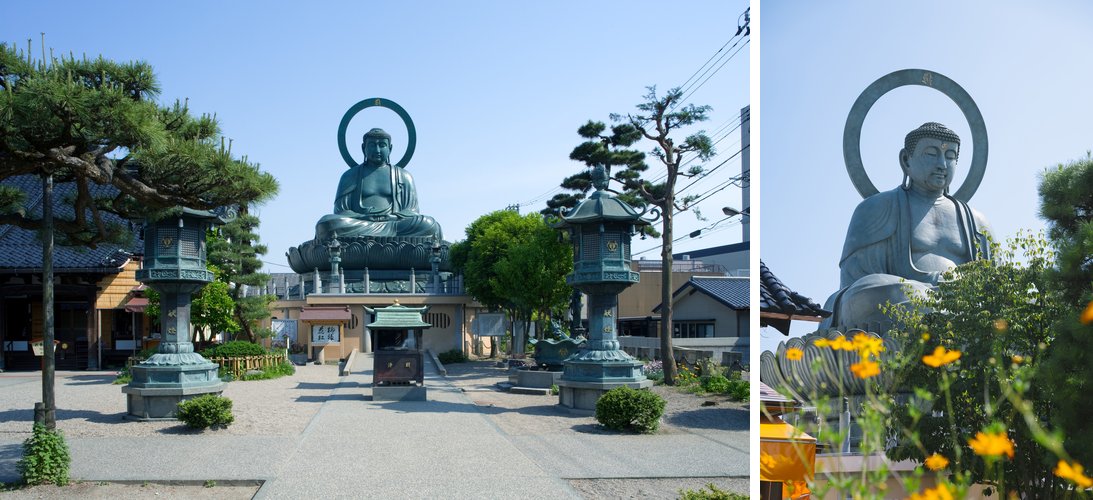
About a 10-minute walk from the Doraemon Promenade stands the Takaoka Great Buddha (Takaoka Daibutsu, 高岡大仏), a bronze Amida Buddha about 16 metres tall including its pedestal. Local craftsmen started it in 1907 and finished it 26 years later, in 1933, using the town’s casting techniques. It is often counted with the Great Buddhas of Nara and Kamakura as one of Japan’s three great Buddhas, and it is known locally as the most handsome of them.
The statue sits in an open courtyard by the street, so you can see it even before the corridor inside the pedestal opens. The corridor holds 13 Buddhist paintings and the head of an earlier Buddha that burned in a fire in 1900.
- Admission: free (donations welcome)
- Hours: pedestal corridor 9:00 – 17:00
Zuiryuji Temple
 Photos: Toyama Tourism Promotion Organization, © Takaoka Tourism Navi
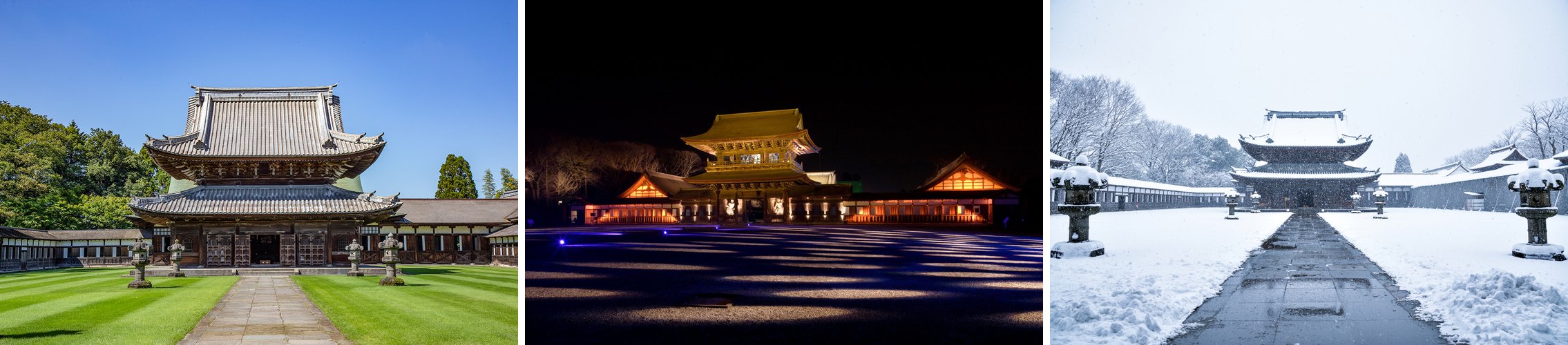
Zuiryuji Temple (Takaokasan Zuiryuji, 高岡山瑞龍寺) is one of the two temples in Toyama Prefecture with National Treasure buildings. The other is Shokoji, later today. Maeda Toshitsune, the third lord of Kaga, built Zuiryuji in memory of his elder half-brother Toshinaga, the founder of Takaoka, and it took about 20 years to complete, in 1663. The main gate, the Buddha hall, and the lecture hall were named National Treasures in 1997. The buildings stand in a wide, walled compound laid out in a straight line, and the whole place feels almost like a castle.
From the Great Buddha it is about a 25-minute walk, passing back through the station to the south side. You arrive shortly before the gate opens at 9:00. Use the quiet minutes to walk around the outside and photograph the gate and the long temple walls, then go in as soon as it opens.
- Admission: ¥500 adult / ¥200 junior high and high school / ¥100 elementary
- Hours: 9:00 – 16:30 (to 16:00 from Dec 10 – Jan 31)
Late Morning: Amaharashi Coast and Lunch
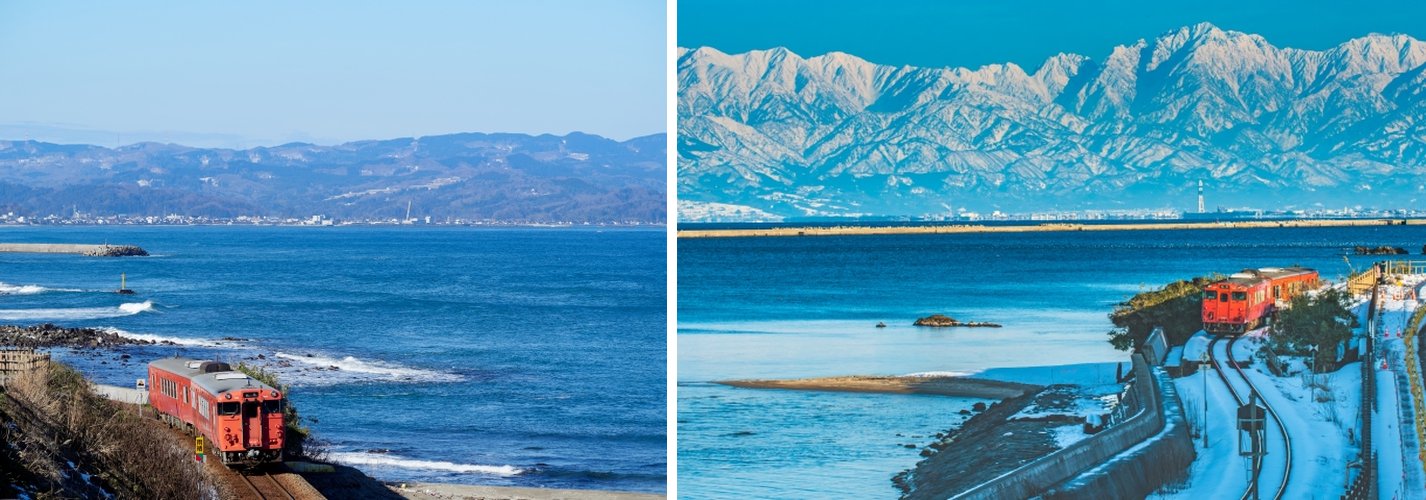
Back at Takaoka Station, take the JR Himi Line north toward the sea. The ride to Amaharashi takes 19 minutes, and the last part runs right along the shore of Toyama Bay.
JR Himi Line
 Photos: PHOTO AC
The JR Himi Line is a short local line of 16.5 kilometres, running from Takaoka to the fishing town of Himi. Trains are infrequent: about one an hour, with longer gaps in the middle of the day. Check the times before you leave each stop, because missing a train can cost you an hour or more. Since March 2026 the line accepts ICOCA and other IC cards, so you can pay the same way as on the rest of the day’s trains.
- Fares: Takaoka to Amaharashi ¥240 (19 min); Amaharashi to Fushiki ¥190 (7 min); Fushiki to Takaoka ¥210 (14 min)
- IC cards: ICOCA and other nationally compatible cards accepted
Amaharashi Coast
 Photos: © Takaoka Tourism Navi
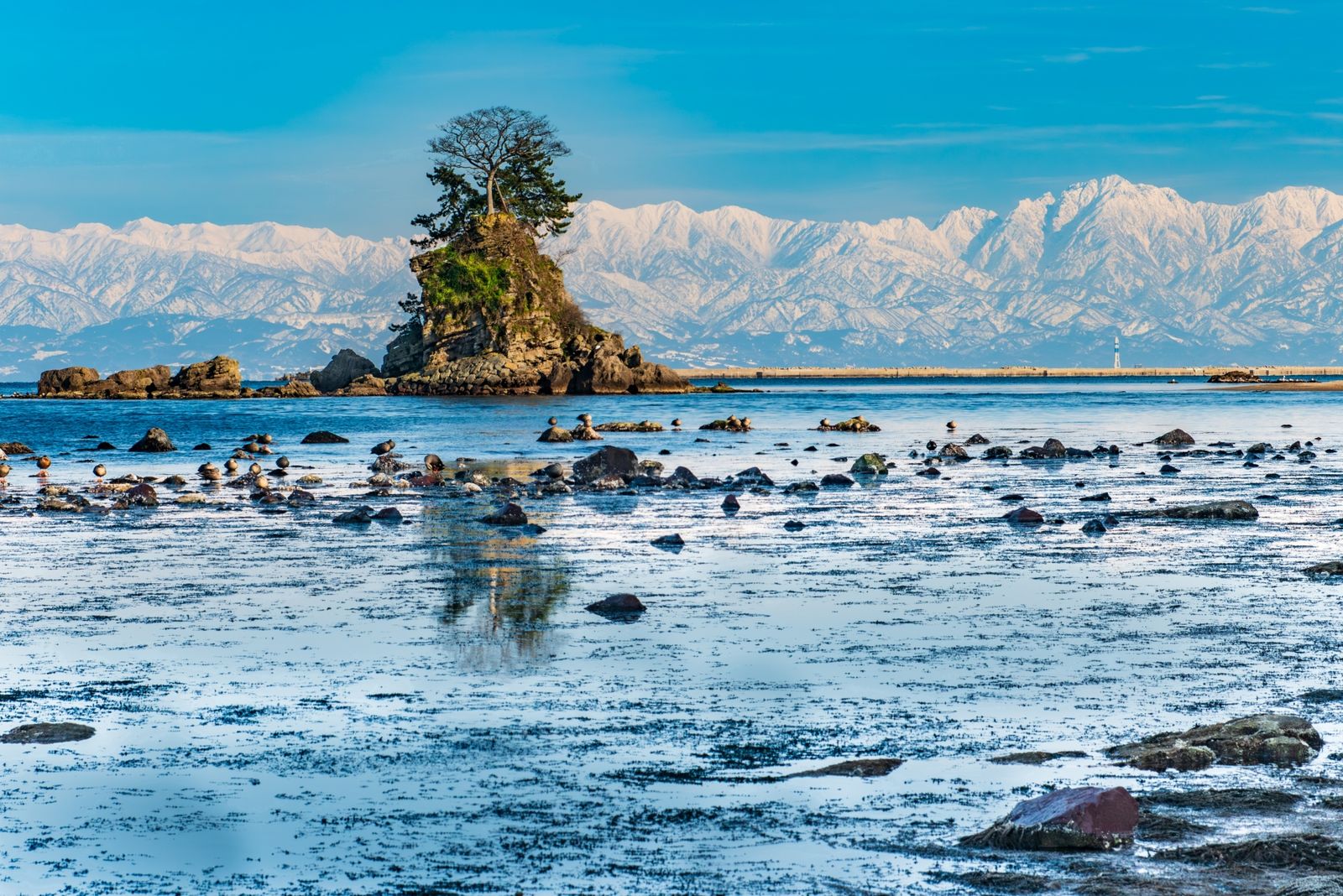
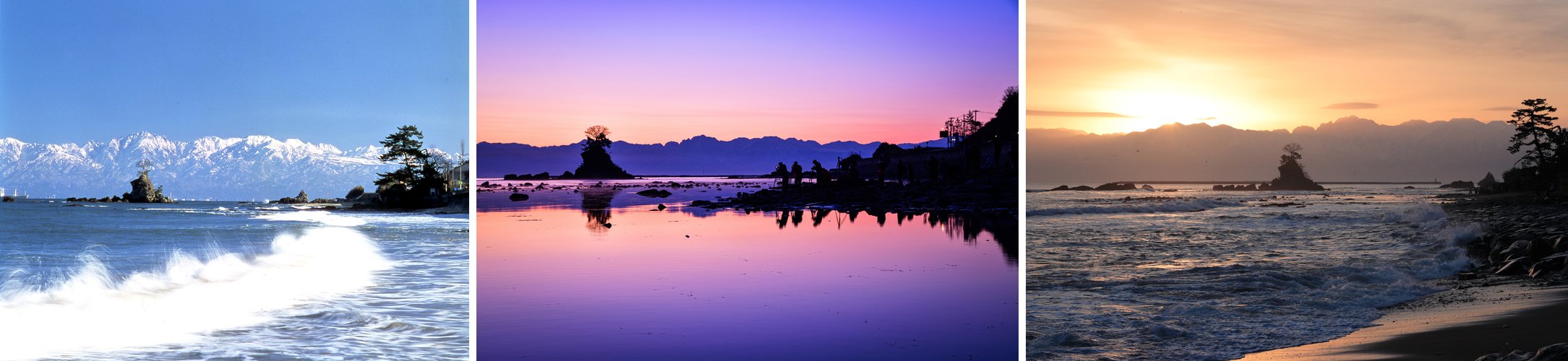
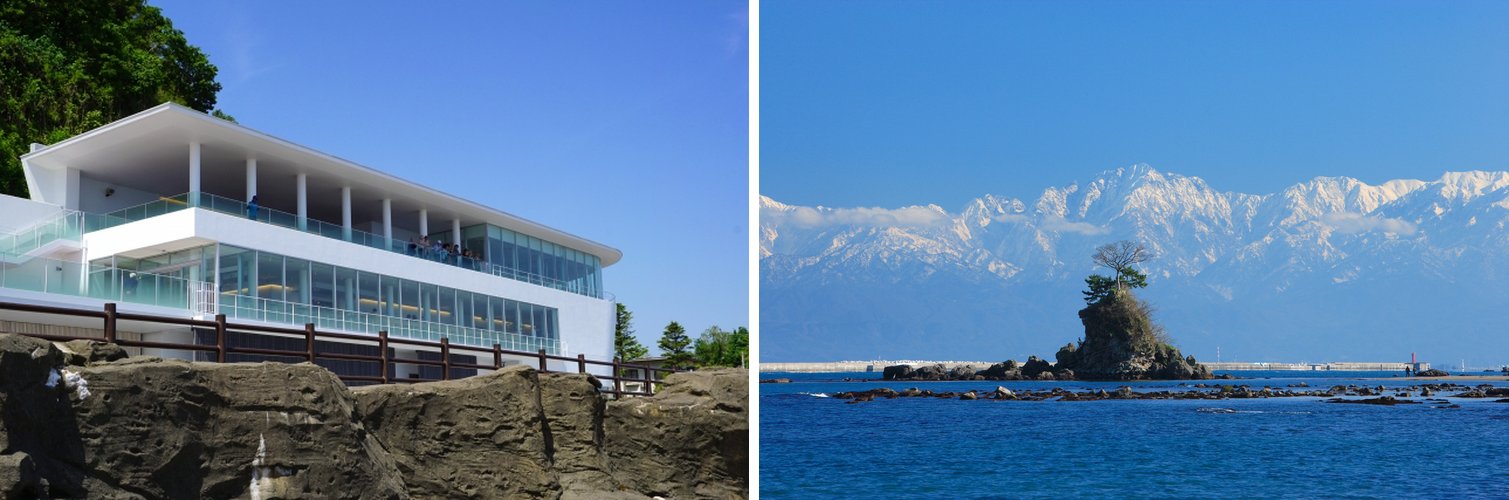
The Amaharashi Coast (雨晴海岸) is about a 6-minute walk from Amaharashi Station. From the beach you look across Toyama Bay to the Tateyama range, a wall of 3,000-metre peaks rising straight out of the sea, with the small pine-topped Onna-iwa rock in the foreground. Mountains this high seen across open sea make a view that is rare anywhere in the world.
The name means “the rain clears.” According to legend, Minamoto no Yoshitsune, fleeing north from his brother Yoritomo, sheltered under a rock here to wait out a sudden shower. That rock, Yoshitsune-iwa, and its small shrine stand at the edge of the beach. The Himi Line runs right along the shore, and a train passing the rocks is a favourite photo.
The view is at its best when the mountains are covered in snow. To photograph the snow-capped Tateyama range clearly, aim for a sunny winter day between November and March, when the air is at its clearest. Allow about 90 minutes for the beach, Yoshitsune-iwa, and a break at Cafe ISOMI TERRACE, the cafe described below.
Cafe ISOMI TERRACE
 Photos: PHOTO AC, © Takaoka Tourism Navi
Cafe ISOMI TERRACE is on the second floor of Michi-no-Eki Amaharashi, the roadside station a short walk from the beach. Its windows face Toyama Bay and the Tateyama range, and the building has observation decks on the second and third floors for an even wider view. The cafe serves light Western-style meals made with local ingredients such as Toyama white shrimp, along with sweets and drinks, so it works for an early lunch or just a coffee with a view before the train back.
- Hours: 9:00 – 17:00 (varies by season, up to 19:00); open every day
Midday: Fushiki and Shokoji Temple
The 12:05 train back toward Takaoka reaches Fushiki in 7 minutes. Fushiki is an old port at the mouth of the Oyabe River. More than 1,200 years ago it was the seat of the government of Etchu Province, and the poet Otomo no Yakamochi, one of the main compilers of the Man’yoshu poetry anthology, lived here for five years as its governor.
Shokoji Temple
 Photos: PHOTO AC, Toyama Tourism Promotion Organization
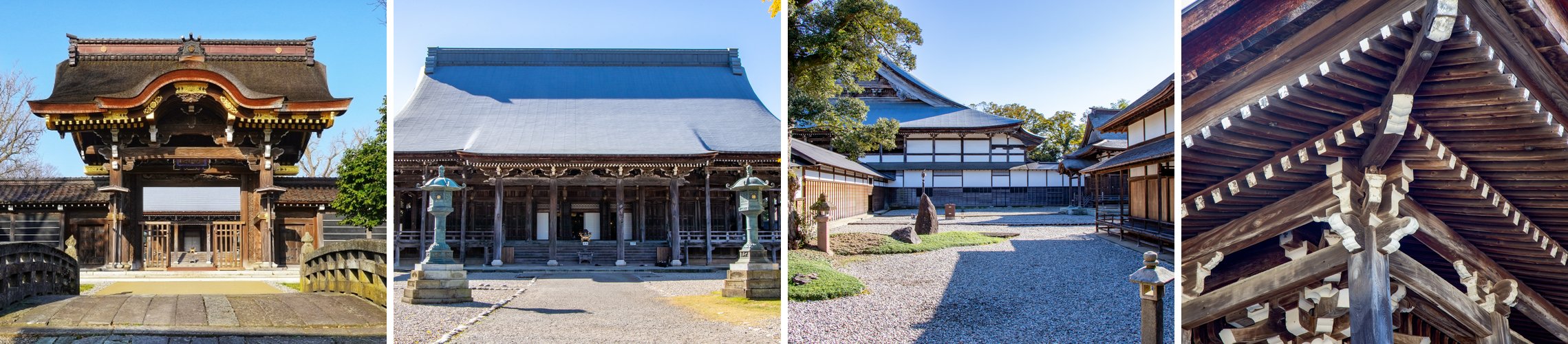
Shokoji Temple (Unryuzan Shokoji, 雲龍山勝興寺) stands on the site thought to have been that provincial government office, and a stone marker in the grounds records it. The temple is about a 6-minute walk from Fushiki Station. The main hall (built in 1795), the great hall, and the formal entrance were named National Treasures in 2022, after a 23-year restoration that returned twelve buildings to how they looked in the late Edo period. Look out for the temple’s “seven wonders,” which include a ginkgo tree that never bears fruit and a stone said to have fallen from heaven.
- Admission: ¥500 adult
- Hours: 9:00 – 16:30, last entry 16:00 (Dec – Feb: 9:00 – 16:00, last entry 15:30)
Afternoon: Takaoka to Toyama
 Photos: Toyama City Tourism Association
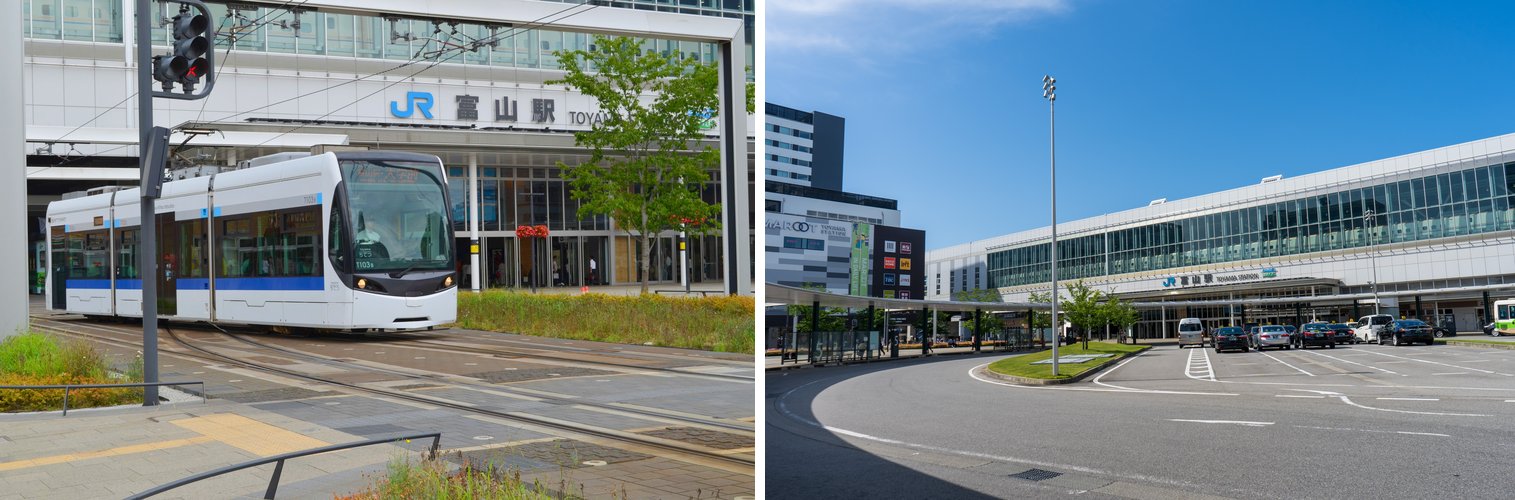
Take the 13:02 Himi Line train from Fushiki back to Takaoka. Do not miss it: the next one is not until 14:40. At Takaoka you have about half an hour before the Ainokaze Toyama Railway train, enough time to collect bags from a locker or buy a snack. The 13:45 local reaches Toyama 18 minutes later.
| Train | Takaoka Departs | Toyama Arrives | Duration |
|---|---|---|---|
| Local (for Toyama) | 13:45 | 14:03 | 18 min |
Where to Stay (in Toyama)
 Photos: PHOTO AC, Toyama City Tourism Association
Most visitors stay in one of two areas.
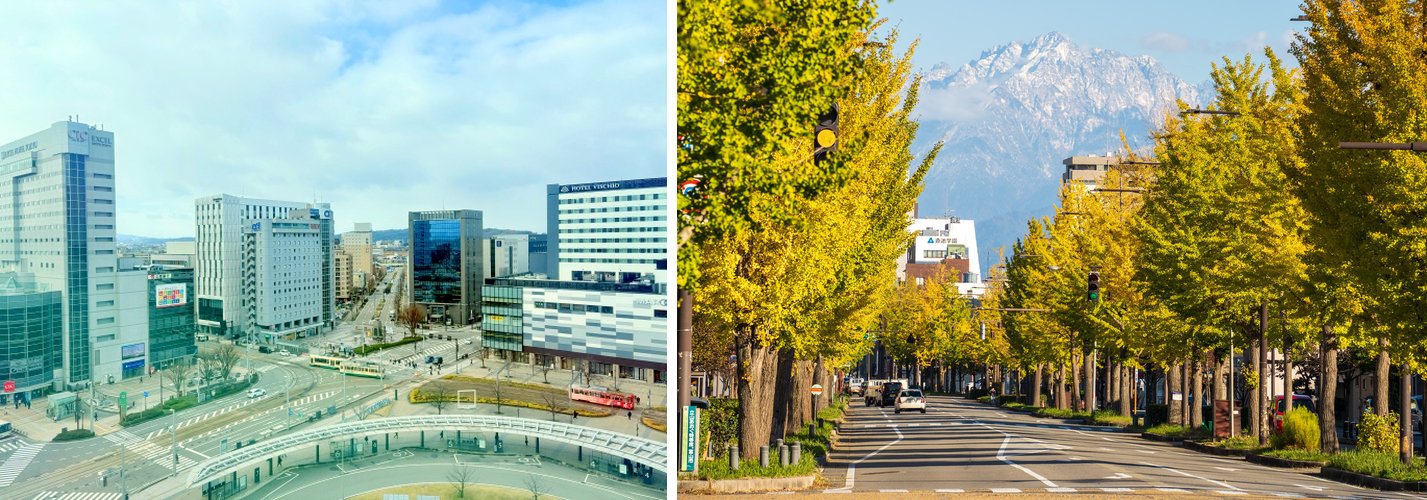
- Around Toyama Station — the most convenient choice, with the Hokuriku Shinkansen, the Ainokaze line, JR trains, and the city’s trams all in one place, and plenty of food and shopping in and next to the station. It suits travellers with luggage or an early train the next morning.
- Around the city centre and Toyama Castle — closer to the shopping streets and evening restaurants, and a short tram ride from the station. It suits a longer stay focused on the city itself.
This guide assumes a stay near the station, at Hotel JAL City Toyama, about a 3-minute walk from Toyama Station. Check-in is from 15:00, but the hotel will keep your luggage if you arrive earlier, so you can drop your bags and go straight back out.
Late Afternoon: Toyama Castle and City Hall Observatory
Toyama is the capital of Toyama Prefecture. Its castle and the city hall stand a few minutes apart in the centre of town, about a 17-minute walk from the hotel. Both have views, one of the castle grounds and one of the whole city and the mountains beyond.
Toyama Castle and Toyama Municipal Folk Museum
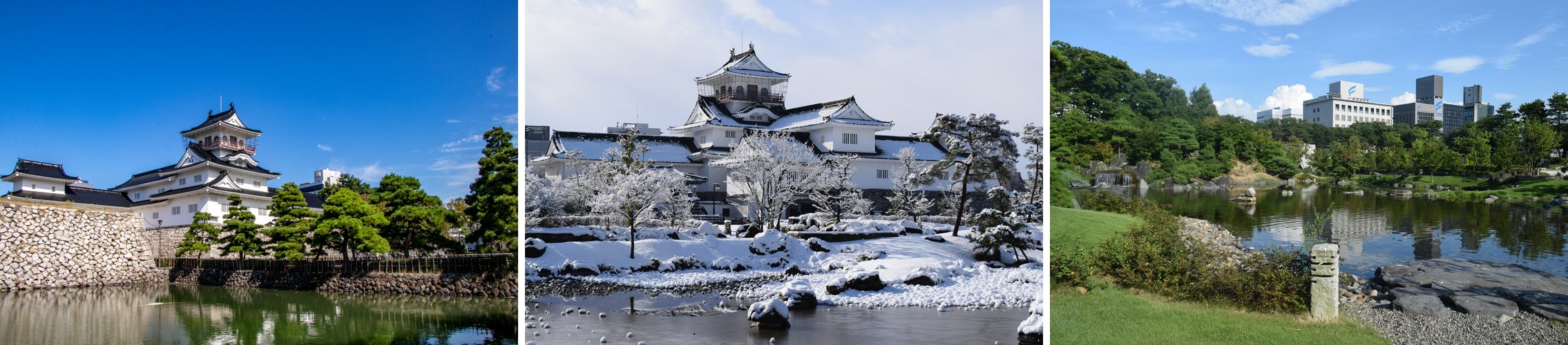 Photos: Toyama Tourism Promotion Organization, Toyama City Tourism Association
Toyama Castle (富山城) was first built in 1543 and changed hands several times in the age of civil wars before passing to the Maeda family. From 1639 it was the seat of the Toyama Domain, a branch of the Maeda clan, for about 230 years. The white keep you see today is not original: it was built in 1954 for an industrial exhibition, and it is now a registered cultural property in its own right. Inside is the Toyama Municipal Folk Museum (富山市郷土博物館), which tells the castle’s 400-year story. The castle park around it is free.
- Admission: museum ¥210 adult, free for high school students and younger; castle park free
- Hours: 9:00 – 17:00, last entry 16:30 (closed Dec 28 – Jan 4)
Toyama City Hall Observatory
 Photos: Toyama City Tourism Association
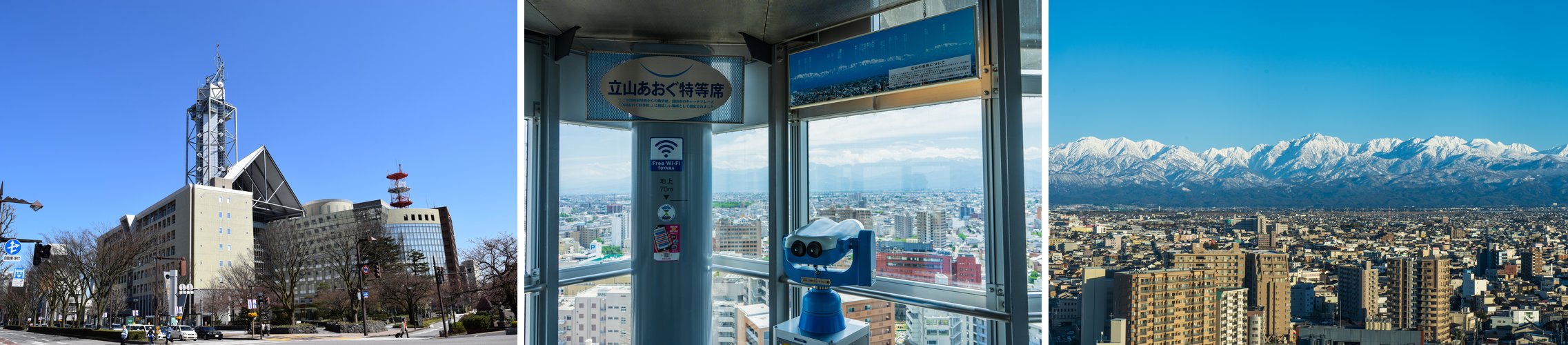
A 6-minute walk from the castle, Toyama City Hall Observatory (富山市役所展望塔), the observation tower on top of the city hall, gives a free 360-degree view from about 70 metres up. Toyama spreads out below you, and on a clear day the Tateyama range lines the horizon to the east.
- Admission: free
- Hours: Apr – Oct 9:00 – 21:00 (weekends and holidays from 10:00); Nov – Mar 9:00 – 18:00 (weekends and holidays from 10:00); closed Dec 29 – Jan 3
- Seasonal notes: the day works in any season, but the Amaharashi Coast is at its best from November to March, when the snow-capped Tateyama range shows most clearly on sunny days. In winter the days are short: Shokoji closes at 16:00 from December to February, and the shops in the Toyama Station market close at 17:00 from December 1 to March 15. If you want to see the Tateyama range from the City Hall Observatory in winter, go there before the castle, while it is still light.
- Backup rainy-day options: Zuiryuji, Shokoji, the Great Buddha’s pedestal corridor, and the Toyama Municipal Folk Museum are all indoors. The Amaharashi Coast is the main outdoor stop. In heavy rain, watch the sea from the cafe and the roadside station instead, or skip the coast and spend longer in Takaoka.
Evening: Toyama Station and Dinner
 Photos: PHOTO AC
From the city hall it is about an 11-minute walk back to Toyama Station, where you have around two hours for shopping and dinner. Shop first: the market inside the station closes earlier than the restaurants.
Dinner near Toyama Station
Toyama’s best-known dishes are all within a few minutes of the station: black soy-sauce ramen, white shrimp from Toyama Bay, and Himi beef.
- Ramen Isshin Toyama Ekimae Honten (ラーメン一心 富山駅前本店) — a ramen shop near the station since 1997, known for its Toyama Black ramen. The dark soup gets its colour from soy sauce aged three years at a local brewery, and it tastes milder than it looks.
- Menya Iroha CiC (麺家いろは CiC店) — the shop that made Toyama Black famous across Japan, with five first-place sales finishes at the Tokyo Ramen Show. Its signature black soy-sauce ramen uses a fish sauce for a deep, rounded flavour. It is in the basement of the CiC building by the station.
- Shiroebi-tei Toyama Station (白えび亭 富山駅店) — a small restaurant inside the station market that created the white shrimp tempura bowl. Delicate white shrimp from Toyama Bay are piled over rice, with little batter so their sweetness comes through. It stays open until 21:00, later than the market shops around it.
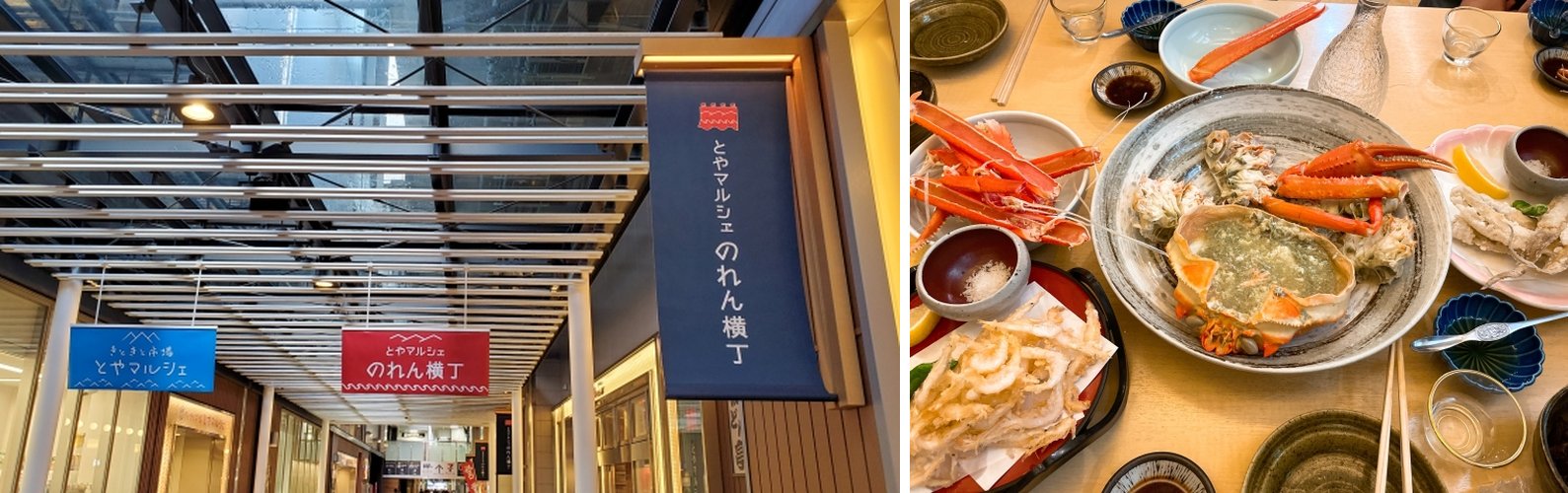
- Himi Gyuya Toyama (氷見 牛屋 富山店) — a grill restaurant in the station’s Noren Yokocho food street, serving Himi beef, the local wagyu, as steak and yakiniku. It stays open until 22:30.
- Menya Tsukushi Toyama Station (麺屋つくし 富山駅店) — rich miso ramen with medium-thick curly noodles, from a chef who trained for about ten years at Sumire, a famous miso ramen shop in Sapporo.
Shopping for the Next Day
Kitokito Market Toyamarche (きときと市場 とやマルシェ), inside the station, has about 40 shops selling Toyama food and souvenirs, but they close at 17:30 (17:00 from December 1 to March 15). For breakfast the next morning, the MAROOT building just outside the station has a ground-floor food hall with deli food and fresh produce, open until 20:00, and there are convenience stores in and around the station for snacks and drinks.
Time-Block Itinerary
Start: Your Kanazawa hotel (near Kanazawa Station, such as ANA Crowne Plaza Kanazawa)
End: Hotel JAL City Toyama
| Time | Stop | Line | Notes |
|---|---|---|---|
| 07:00 | Depart hotel to Kanazawa Station | — | ~5 min walk |
| 07:16 | Depart Kanazawa to Takaoka | IR Ishikawa / Ainokaze Toyama Railway | Through train bound for Kurobe; ¥870, 41 min |
| 07:57 | Takaoka Station → Doraemon Promenade | — | ~3 min walk |
| ~08:00 | Doraemon Promenade | — | About 5 min |
| 08:05 | Doraemon Promenade → Takaoka Great Buddha | — | ~10 min walk |
| ~08:15 | Takaoka Great Buddha | — | About 10 min |
| 08:25 | Takaoka Great Buddha → Zuiryuji Temple | — | ~25 min walk |
| ~08:50 | Zuiryuji Temple | — | Gate opens 9:00; about 30 min, of which 20 inside |
| 09:20 | Zuiryuji Temple → Takaoka Station | — | ~12 min walk |
| 09:43 | Depart Takaoka to Amaharashi | JR Himi Line | Bound for Himi; ¥240, 19 min |
| 10:02 | Amaharashi Station → Amaharashi Coast | — | ~6 min walk |
| ~10:08 | Amaharashi Coast and Cafe ISOMI TERRACE | — | About 90 min, incl. a break or early lunch |
| 11:38 | Amaharashi Coast → Amaharashi Station | — | ~6 min walk |
| 12:05 | Depart Amaharashi to Fushiki | JR Himi Line | Bound for Takaoka; ¥190, 7 min |
| 12:12 | Fushiki Station → Shokoji Temple | — | ~6 min walk |
| ~12:18 | Shokoji Temple | — | About 30 min |
| 12:48 | Shokoji Temple → Fushiki Station | — | ~6 min walk |
| 13:02 | Depart Fushiki to Takaoka | JR Himi Line | Bound for Takaoka; ¥210, 14 min; next train 14:40 |
| ~13:16 | Takaoka Station | — | Transfer; about 30 min |
| 13:45 | Depart Takaoka to Toyama | Ainokaze Toyama Railway | Bound for Toyama; ¥390, 18 min |
| 14:03 | Toyama Station → Hotel JAL City Toyama | — | ~7 min, incl. getting out of the station |
| ~14:10 | Hotel JAL City Toyama | — | Drop luggage; about 30 min |
| 14:40 | Hotel → Toyama Castle | — | ~17 min walk |
| ~14:57 | Toyama Castle and Toyama Municipal Folk Museum | — | About 60 min |
| 16:00 | Toyama Castle → Toyama City Hall Observatory | — | ~6 min walk |
| ~16:06 | Toyama City Hall Observatory | — | About 30 min |
| 16:36 | Toyama City Hall Observatory → Toyama Station | — | ~11 min walk |
| ~16:47 | Toyama Station: shopping and dinner | — | About 2 hours (see the Evening section) |
| ~19:00 | Return to hotel | — | ~3 min walk; end of day |
Transport Notes
- The Kanazawa to Takaoka and Takaoka to Toyama legs use IR Ishikawa Railway and Ainokaze Toyama Railway, not JR. Only the three Himi Line rides are JR.
- IC cards (ICOCA, Suica, and other nationally compatible cards) work on every train today, including the Himi Line since March 2026, so you do not need to buy separate tickets.
- The Japan Rail Pass covers the three Himi Line rides and the Ainokaze ride from Takaoka to Toyama, as long as you ride straight through without getting off in between. It does not cover Kanazawa to Takaoka. That is about ¥1,030 of the day’s ¥1,900 in fares, so the pass is only worth it if you already have one for the rest of your trip.
- The Himi Line runs about once an hour. After the 13:02 from Fushiki, the next train to Takaoka is at 14:40, and after the 12:05 from Amaharashi it is at 12:55.
- You carry your luggage for most of the day, including a walk of about 50 minutes around Takaoka and the beach at Amaharashi. To travel lighter, use a coin locker at Takaoka Station and collect your bags at 13:16.
Cost and Ticket Notes
- Kanazawa to Takaoka (IR Ishikawa / Ainokaze Toyama Railway): ¥870, adult
- Takaoka to Amaharashi (JR Himi Line): ¥240, adult
- Amaharashi to Fushiki (JR Himi Line): ¥190, adult
- Fushiki to Takaoka (JR Himi Line): ¥210, adult
- Takaoka to Toyama (Ainokaze Toyama Railway): ¥390, adult
- Doraemon Promenade, Takaoka Great Buddha, Amaharashi Coast, Toyama Castle park, and the City Hall Observatory: free
- Zuiryuji Temple: ¥500 adult. Shokoji Temple: ¥500 adult. Toyama Municipal Folk Museum: ¥210 adult.
- Budget for: about ¥1,900 in train fares, about ¥1,210 in admissions, lunch or a break at the cafe, dinner, shopping for the next morning, and a coin locker if you use one.
This day pairs well with:
- Kanazawa - Kenrokuen & Historic Districts — the day before, based at the same Kanazawa hotel
- Toyama to Matsumoto Transfer Day — the day after, starting from the same Toyama hotel