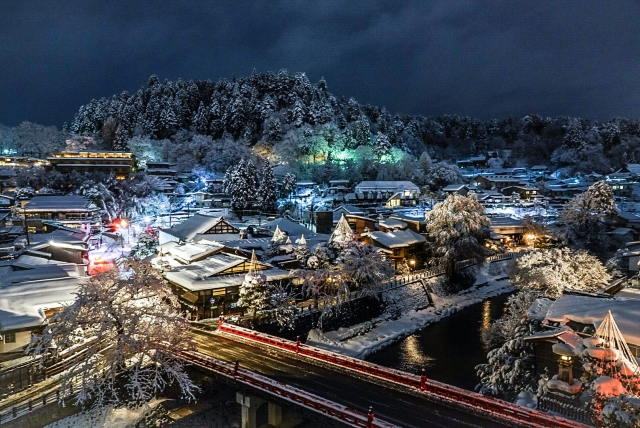
This day moves the trip on from Nagoya to Takayama, the small mountain town at the heart of the Hida region, connected directly by the limited express Hida with no transfer needed. With the whole afternoon free once you arrive, it’s a full day of walking through Takayama’s Edo-period old town.
Along the way, this guide covers Takayama Jinya, the historic Sanmachi Suji merchant quarter, a temple-lined walk through the Higashiyama hills, Sakurayama Hachimangu Shrine, and the Hida Takayama Town Museum, plus where to stay near the station and what to eat for dinner in the old town.
Morning: Nagoya to Takayama
 Photos: PHOTO AC
Takayama, also known as Hida Takayama for the surrounding Hida region of Gifu Prefecture, is a small mountain town about two and a half hours from Nagoya by limited express train. Once the seat of the ancient Hida Province and now often nicknamed the “Little Kyoto of Hida,” the town preserves entire blocks of Edo-period merchant houses, sake breweries, and lattice-fronted shops largely unchanged since the 17th century. Its compact old town, framed by the Miyagawa River and the surrounding mountains, makes it one of the most walkable historic districts in the Japan Alps, and a natural overnight stop for travelers heading on from Nagoya toward Shirakawa-go and Kanazawa.
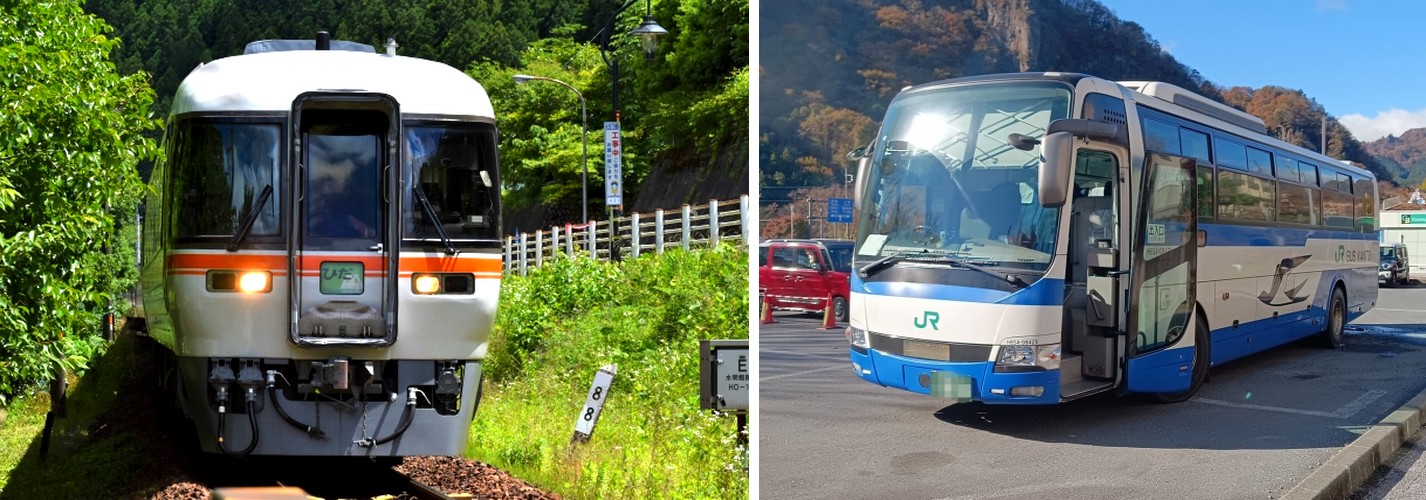
Getting to Takayama is convenient via both highway buses and limited express trains from Nagoya.
Adult Tickets (from Nagoya to Takayama):
- Highway Bus: ¥4,000~ , 170 min
- Express Train: ¥6,140~ , 145 min (Base fare + Limited express surcharge)
Highway Bus
The first and most economical way is to travel by highway bus. It’s also easy to reserve online through a site such as Japan Bus Tickets. However, be aware that highway buses stop at only a few points along the way, take longer to reach the destination, and are reservation-only.
Booking a bus online
- Enter your departure point, destination, and travel date, then choose a bus, seat type, and departure time. Seat numbers are assigned by the bus company on the day of boarding.
- Your ticket and booking details are kept in “My Page,” where you can also check the boarding location or cancel your reservation.
- Show the ticket in My Page to the bus crew when boarding.
Express Train
Taking the express train is recommended, since it runs more frequently and stops at more points along the way. It’s relatively more expensive, but also easier to travel with heavy luggage than by bus. Tickets for Limited Express/Express/Rapid Service trains operated in West Japan can be purchased on the JR West website.
Train routes and ticket types can get complex, so it’s worth reading the user guide before booking online — or, if that feels like a lot, it’s just as easy to buy tickets in person at the station.
Collecting an online reservation:
- Available at JR West/JR Shikoku e5489 machines or ticket offices (Midori-no-Madoguchi), JR Kyushu reserved-ticket machines or offices, JR East Travel Service Centers (Tokyo area), or JR Central machines/offices marked with the e5489 logo.
- Collect by the day your ticket becomes valid, using the physical credit card used for payment (virtual cards aren’t accepted).
This itinerary assumes taking the limited express Hida from Nagoya to Takayama on the schedule below. The limited express Hida runs directly on the JR Takayama Main Line, with no transfer needed.
| Train | Nagoya Departs | Takayama Arrives | Duration |
|---|---|---|---|
| Hida 3 | 08:43 | 10:58 | 135 min |
| Hida 5 | 09:39 | 12:14 | 155 min |
Before you go: You need both the base fare ticket and the limited express surcharge to ride the Hida — an ordinary train ticket alone isn’t valid on this train.
Where to Stay (in Takayama)
 Photos: PHOTO AC
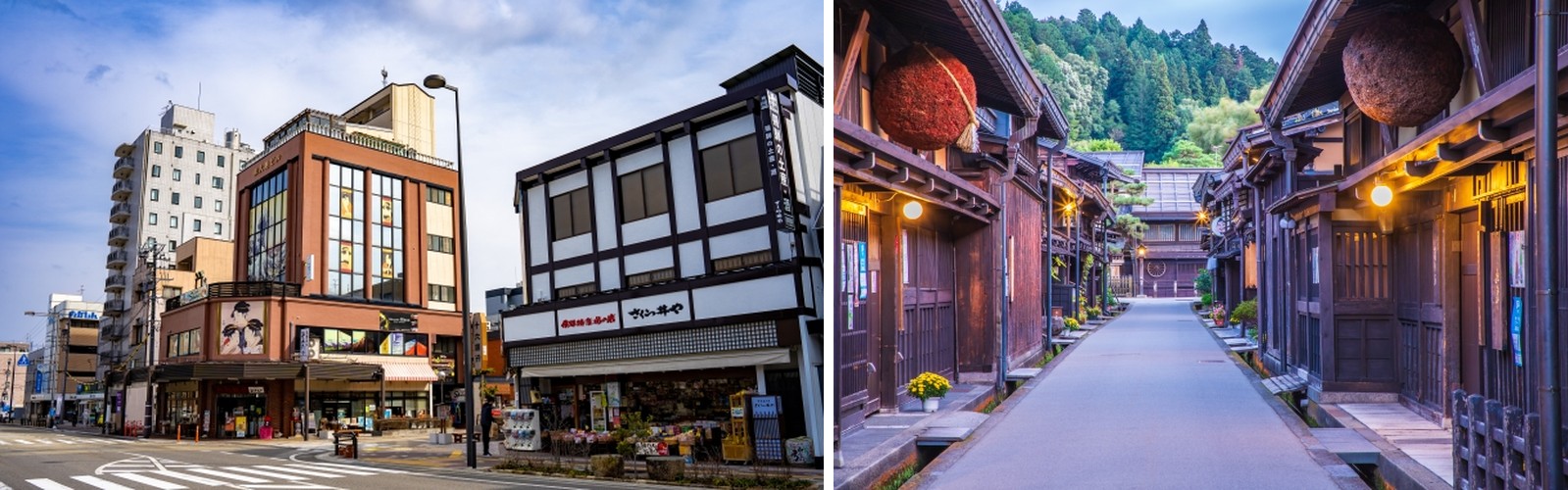
When choosing where to stay in Takayama, it is worth considering both the distance to the train station and the atmosphere of the surrounding neighborhood. Most accommodations are located near JR Takayama Station, and this guide assumes a stay there, such as at Hotel and Spa Gift TAKAYAMA.
- Staying near JR Takayama Station is the most convenient choice for many travelers, especially first-time visitors to the region. As the main transportation hub for connections to Shirakawa-go, Kanazawa, Toyama, and Nagoya, the station area allows you to drop off your luggage shortly after arrival and begin exploring without delay. It is also the most practical base for catching the Nohi Bus to Shirakawa-go the next morning. From budget-friendly business hotels to traditional ryokan, the area offers a wide range of accommodations to suit different travel styles and budgets.
- Staying in the Old Streets (Sanmachi Suji) and Miyagawa River area offers a more atmospheric and memorable experience. Located within Takayama’s historic preservation district, this neighborhood is lined with beautifully preserved merchant houses dating back to the Edo period. The picturesque streets, traditional architecture, and riverside scenery create one of the most romantic settings in town. Guests staying here can enjoy an early morning walk to the Miyagawa Morning Market and soak in the unique character of Takayama before the day-trippers arrive.
Midday: Takayama Old Town and Lunch
After arriving in Takayama, drop your luggage at your hotel before exploring the area — if you arrive before check-in opens at 15:00, most front desks will still hold your bags for you. The attractions of Takayama are compact enough to cover most of it without needing local transport.
Takayama Jinya
 Photos: Gifu Prefecture Tourism Federation
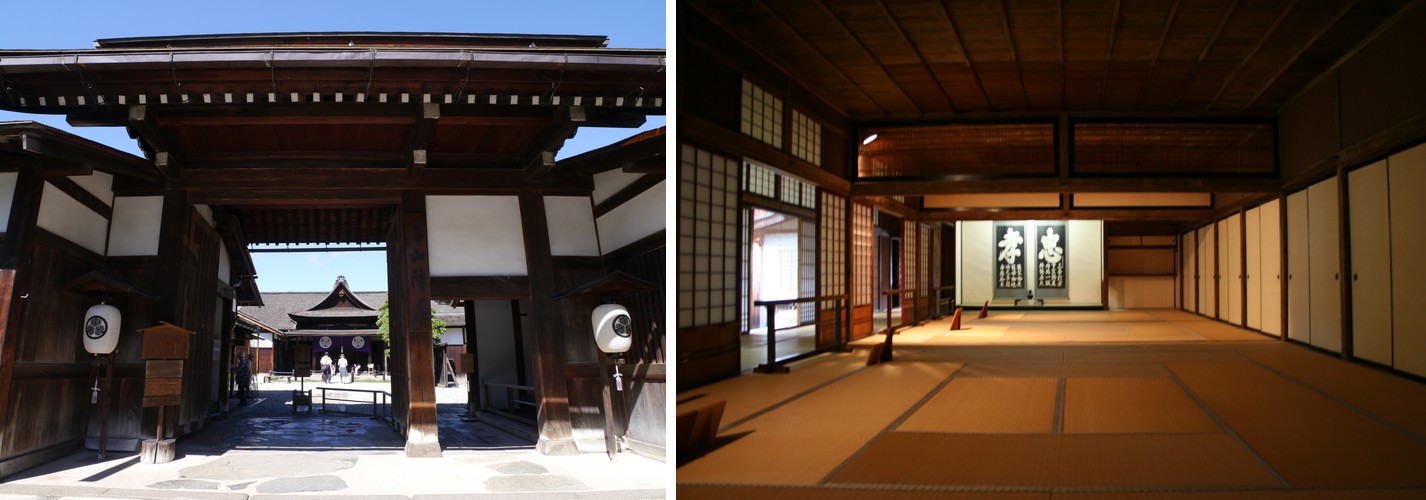
A 10-minute walk east of Takayama Station leads to one of Japan’s most historic administrative offices, Takayama Jinya. It was the administrative headquarters where 25 generations of government officials appointed by the Tokugawa Shogunate governed the Hida region. Of the approximately 60 such offices that once existed throughout Japan, it is the only one that survives in its original Edo-period form. The complex offers a rare glimpse into how a shogunate outpost functioned, featuring administrative offices, a courtroom, reception halls, residential quarters, a traditional garden, and Japan’s largest remaining Edo-period rice storehouse. Notable rooms include the Arashiyama-no-Ma, the living quarters used by magistrates and their families, and the grand Ohiroma, a spacious formal hall used for important ceremonies and seasonal events.
- Admission: ¥500 (adult)
- Hours: 8:45 – 16:30
Nakabashi Bridge and Sanmachi Suji Old Town
 Photos: Hida Takayama Tourism
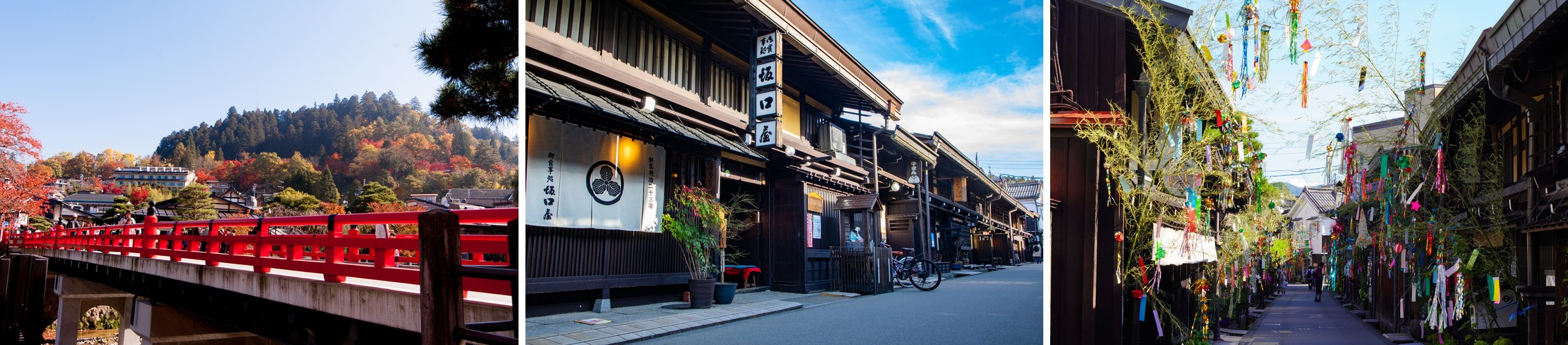
Further east from Takayama Jinya stands an iconic red bridge, Nakabashi, spanning the Miyagawa River. Its bright vermilion paint makes it one of the famous photo spots across seasons.
On the other side of the river lies Takayama’s historic merchant quarter, Sanmachi Suji Old Town. Three streets there (Kami-ichi-no-machi, Kami-ni-no-machi, and Kami-san-no-machi) have been designated as a National Important Preservation District for Groups of Traditional Buildings. Latticed wooden storefronts, clear water channels running along the street, and sake breweries marking their new brew with a hanging cedar ball (sugidama) all give the area a strongly preserved Edo-period feel.
 Photos: Gifu Prefecture Tourism Federation, PHOTO AC
Many of the old merchant houses have been converted into cafés, restaurants, souvenirs, and craft shops. It’s a good place to take a rest for lunch. Here are a few spots worth stopping by:
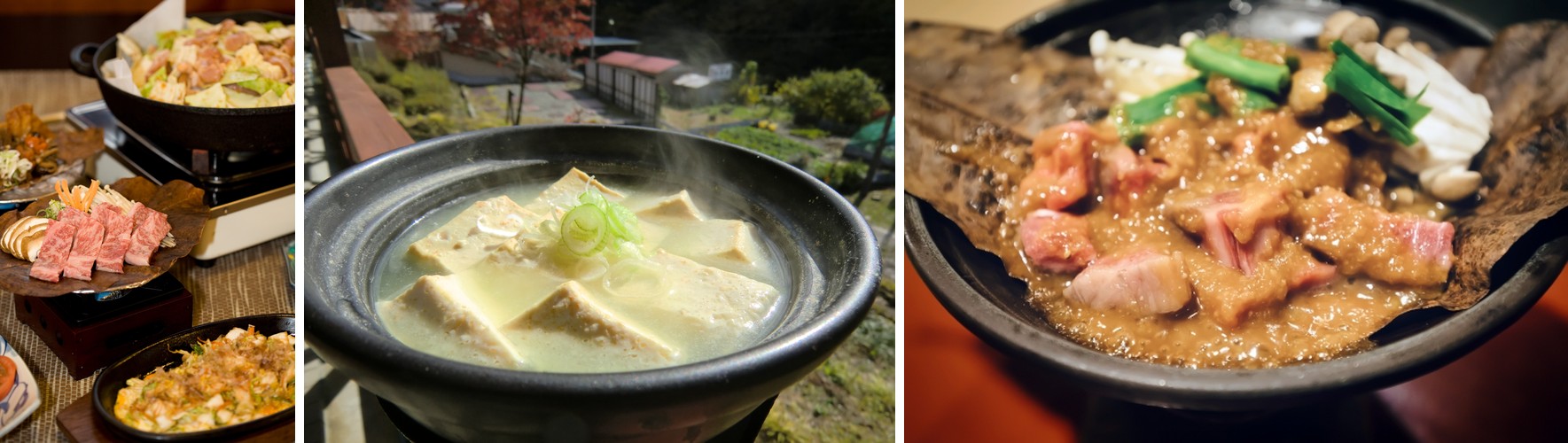
- Hisadaya (久田屋) — a traditional townhouse built in the late Edo period. It serves affordable local dishes that showcase the flavors of the Hida region. Famous for its homemade miso, the restaurant’s signature Hoba Miso and Hida Beef Hoba Miso are grilled on a magnolia leaf, creating a rich and smoky aroma. Paired with seasonal side dishes and warm hospitality, Hisadaya offers an authentic taste of Takayama’s culinary heritage.
- Sakaguchiya (坂口屋) — a long-established restaurant founded in the Meiji era, renowned for its premium A4 and A5 Hida beef dishes. From the original Hida Beef Nigiri Sushi to hearty rice bowls made with rare cuts of Hida beef, the menu highlights the rich flavor and delicate sweetness of this local specialty. Set in a traditional Hida townhouse, the restaurant also features a unique kura (storehouse) exhibition showcasing miniature Takayama Festival floats and karakuri puppets, offering visitors a taste of both Hida cuisine and culture.
- Noguchiya (のぐちや) — The restaurant is operated by a long-established tofu maker with more than 100 years of history in Takayama. Using carefully selected Japanese soybeans and the pure waters of Hida, the restaurant serves a variety of delicious tofu dishes, including yudofu (hot tofu), yuba (tofu skin), tofu steak, and agedashi tofu.
- Wakichaya (脇茶屋) — a welcoming local restaurant where visitors can enjoy Hida beef, traditional Takayama dishes, and handmade soba or udon noodles. Its most popular menu item, the Hida Beef Miso Set, combines Hida beef, hoba miso, soba, and a variety of regional specialties in one satisfying meal. With its warm wooden interior, folk art decorations, and relaxed atmosphere, Wakichaya is a great place to experience the authentic flavors and hospitality of the Hida region.
- Sabo Onoya (茶房 大野屋) — The café specializes in handmade zenzai (sweet red bean soup), including matcha zenzai with grilled mochi, chestnut zenzai, and soft shiratama dumplings made fresh every morning. Seasonal treats such as shaved ice in summer and traditional amazake in winter make it a perfect place to enjoy classic Japanese sweets in a cozy historic setting.
Afternoon: Museum and Temple-Lined Walking Path
Hida Takayama Town Museum
 Photos: PHOTO AC, Hida Takayama Tourism
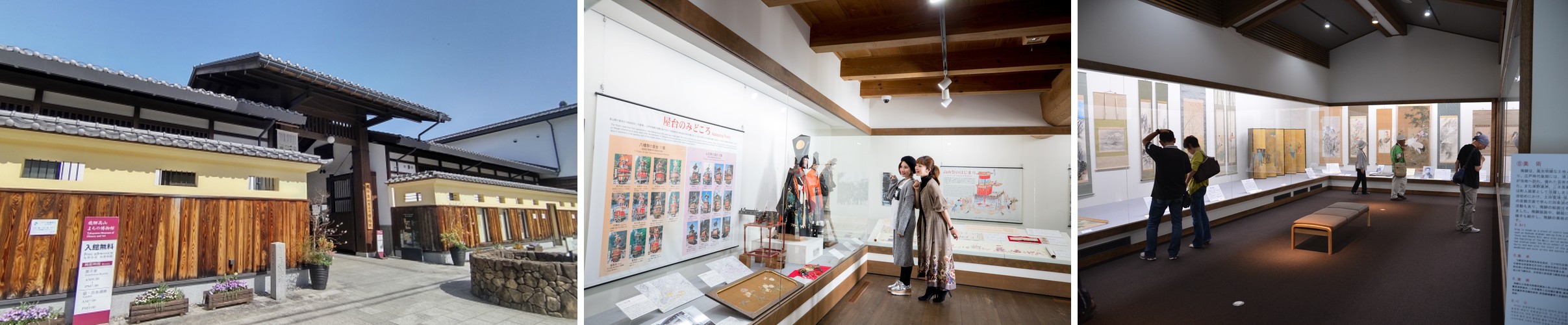
After lunch in the old town, take a short walk east to Hida Takayama Town Museum, which tells the history of Takayama through family scrolls and artifacts from its merchant leaders. This museum preserves the memory of the old castle town across a series of small exhibition rooms. The white plaster storehouse walls and quiet courtyard make it a calm stop between busier parts of the old town. Exhibits cover the formation of Takayama as a castle town, the culture of its merchant houses, and the history of the Takayama Festival, alongside work by local artists and wood carvings connected to the monk Enkū.
- Admission: free
- Exhibition rooms: 9:00 – 19:00
- Garden: 7:00 – 21:00
Higashiyama Walking Course
 Photos: Gifu Prefecture Tourism Federation, Hida Takayama Tourism
Further east across the Enako River, a peaceful trail known as the Higashiyama Walking Course traces the foot of the hills along the eastern edge of Takayama’s old town, staying level the whole way rather than climbing. The 5.5-kilometer walking route connects numerous temples, cultural heritage sites, historic graves, and the ruins of Takayama Castle, forming a scenic “corridor of history.” Along its quiet lanes and stone-paved paths, visitors can enjoy beautiful seasonal landscapes, from spring blossoms and vibrant autumn foliage to the serene, snow-covered beauty of winter. However, this temple-lined walking path could take quite some time if you try to visit every temple, so here are a few worth picking out along the way:
- Daioji (大雄寺)
- Higashiyama Hakusan Shrine (東山白山神社)
- Eikyoin (栄鏡院)
- Kyushoji (久昌寺)
- Unryuji (雲龍寺)
Shorenji Temple (Takayama Betsuin Shorenji)
 Photos: Hida Takayama Tourism
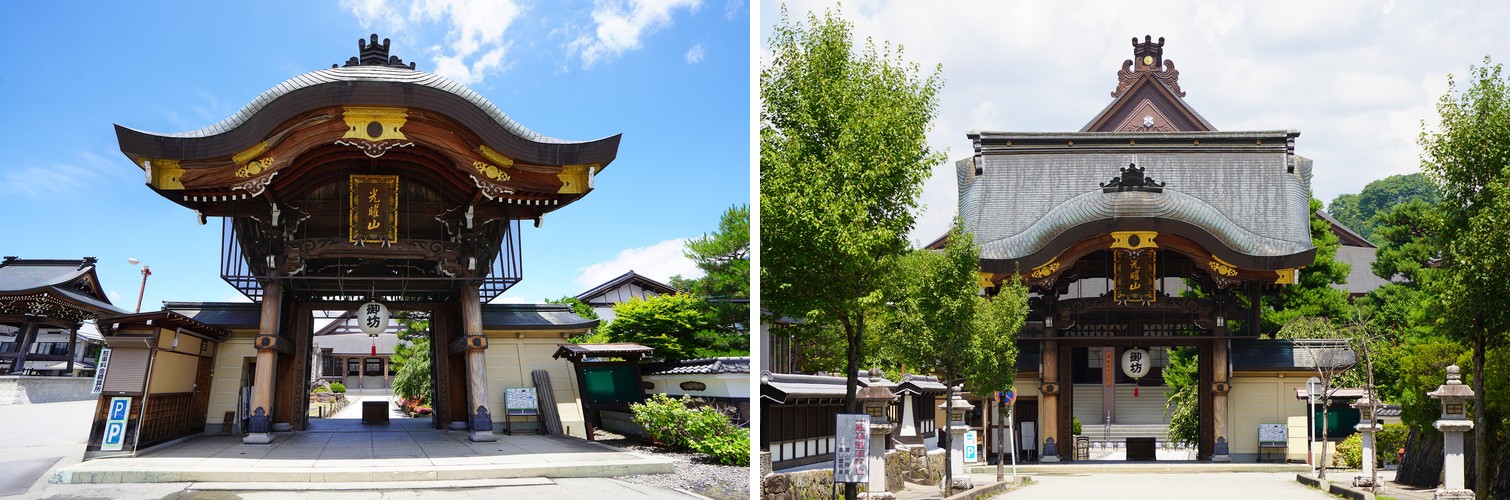
On the way back, pay a short visit to Shorenji Temple (Takayama Betsuin Shorenji), a prominent Buddhist temple located in the Higashiyama area, east of central Hida Takayama, within the city’s historic temple district. Renowned for its majestic main hall, striking temple gate, and meticulously maintained grounds, it is one of Takayama’s most popular cultural landmarks. Founded approximately 750 years ago by Priest Kanenbo Zenshun as a Jodo Shinshu training hall in Shirakawa-go, now a UNESCO World Heritage Site, the temple was later relocated to its current site in Takayama and has long served as a spiritual center of the Hida region.
Kusakabe Traditional House
 Photos: Hida Takayama Tourism, Gifu Prefecture Tourism Federation
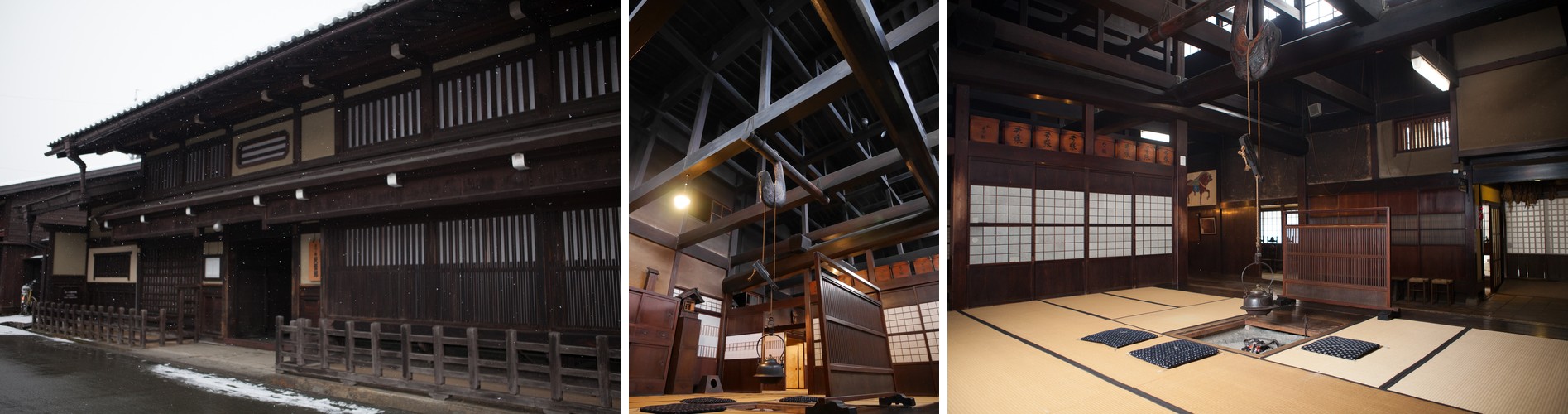
Kusakabe Traditional House (Kusakabe Folk Crafts Museum) is a well-preserved merchant townhouse in Takayama, just 5-min walk from Shorenji Temple. Once home to the influential Kusakabe family, who prospered as official merchants during the Edo period, the house was rebuilt in 1879 by master carpenter Jisuke Kawajiri in the traditional architectural style of the era. Visitors can admire its remarkable 13-meter red pine beam, spacious open atrium, elegant Buddhist altar, and a collection of folk art and crafts, including the family’s treasured Shibukusa pottery. The museum also features a delightful shop offering handcrafted folk crafts from across Japan, making it a wonderful place to experience the culture, craftsmanship, and warm hospitality of Hida-Takayama.
- Admission: ¥1,000 (adult)
- Hours: 10:00 – 16:00
Sakurayama Hachimangu Shrine & Takayama Festival Floats Exhibition Hall
 Photos: Hida Takayama Tourism, PHOTO AC
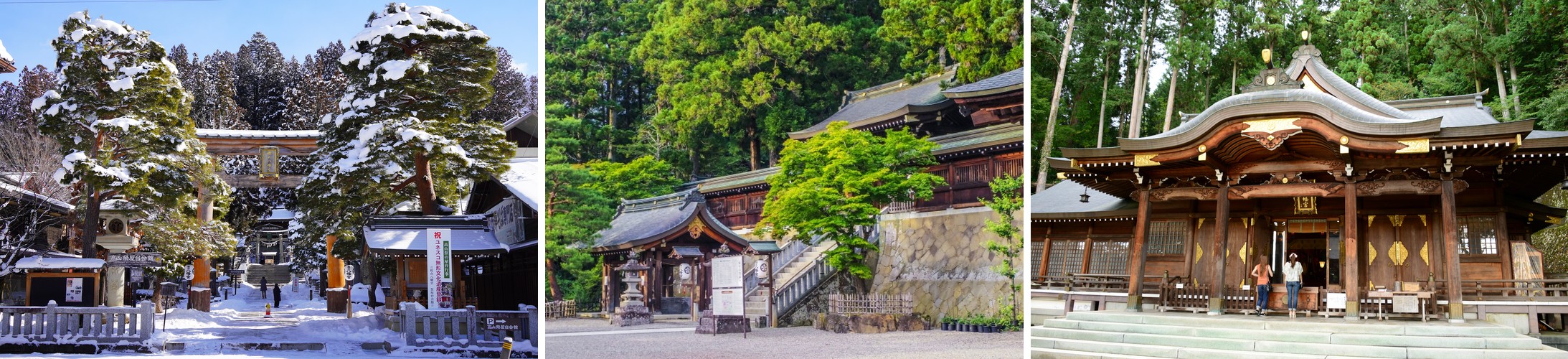
A 5-minute walk north brings you to a historic Shinto shrine on the northern edge of Takayama’s old town, Sakurayama Hachimangu Shrine. It has long been regarded as the guardian shrine of the area. Visitors reach the shrine through a large torii gate and a charming approach lined with shops and restaurants. One of its unique features is the dramatic stone staircase leading to the shrine gate, where all 19 steps are carved from single slabs of stone.
The shrine is best known for hosting the Autumn Takayama Festival on October 9 and 10, one of Japan’s most celebrated festivals and a designated Important Intangible Folk Cultural Asset. Even outside the festival season, visitors can admire the festival floats at the nearby Takayama Festival Floats Exhibition Hall, where the exquisite craftsmanship of Hida artisans is showcased year-round.
Takayama Festival Floats Exhibition Hall
- Admission: ¥1,000 (adult)
- Hours: 9:00 – 17:00
Hida Kokubunji Temple
 Photos: Hida Takayama Tourism, PHOTO AC, Gifu Prefecture Tourism Federation
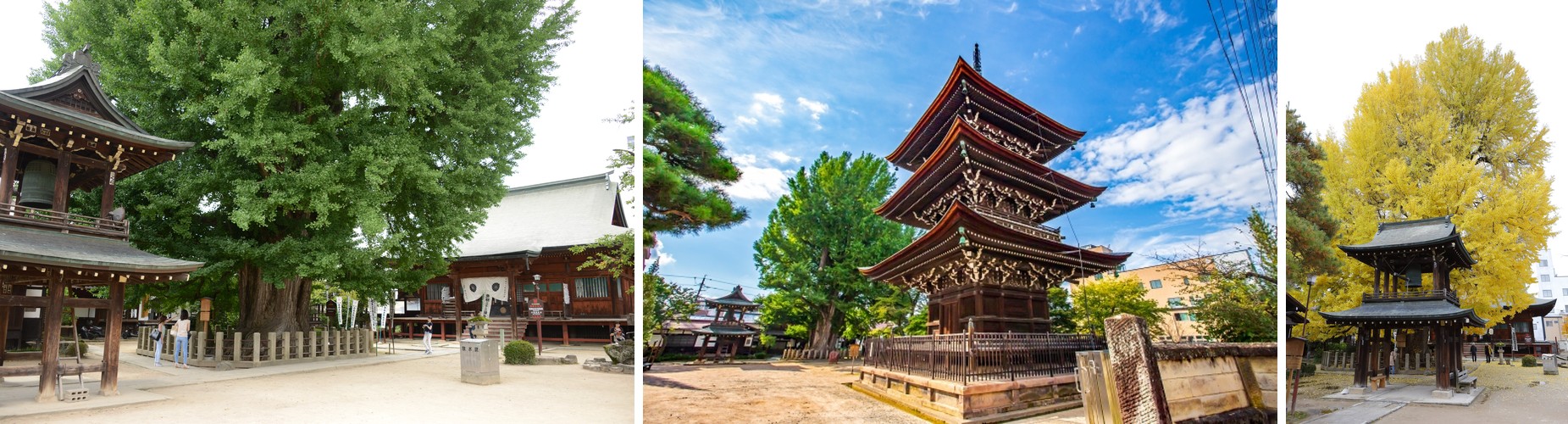
Before dinner, make a short detour to visit the oldest temple in the Hida region. Hida Kokubunji (飛騨国分寺) was founded in 746 AD by imperial decree of Emperor Shōmu as one of Japan’s provincial temples. Visitors can admire the elegant Muromachi-period Main Hall, important Buddhist statues, a beautiful three-story pagoda crafted by Hida master carpenters, and the historic bell tower gate relocated from Takayama Castle. The temple’s most famous landmark is a magnificent 1,200-year-old ginkgo tree, designated as a cultural heritage asset, which has stood watch over the temple since its founding. Blending deep history, traditional architecture, and natural beauty, Hida Kokubunji is one of Takayama’s most fascinating cultural treasures.
Evening: Takayama Old Town and Dinner
 Photos: Gifu Prefecture Tourism Federation
As the sky turns dark, the once-busy streets become wonderfully quiet and atmospheric, and the old town’s historic character feels even more pronounced. This is a chance to enjoy the old town’s scenery from a different perspective.
In addition to the cafés and restaurants already introduced, izakaya open in the evening, giving you another way to experience Japanese food culture. Izakaya are casual drinking establishments, similar to tapas bars, where customers order a variety of small dishes of food that can be shared at the table. Here are some restaurants highly ranked by locals:
-
Dekonaru Yokocho (でこなる横丁) — is a lively food alley in Takayama featuring around 20 unique eateries and bars showcasing local Hida flavors. From Hida beef, Takayama ramen, gyoza, tempura, and grilled specialties to pizza made with local vegetables and a wide selection of regional sake, there is something for every taste.
-
Izakaya Wada (居酒屋 和田) — beloved local izakaya in Takayama that celebrates its 50th anniversary in 2025. Known for its affordable prices, extensive menu, and wide selection of local sake. Signature dishes include the restaurant’s famous miso oden, grilled pig’s feet, miso-glazed eggplant, and Kei-chan (miso-marinated chicken stir-fry), alongside local specialties such as tsukemono steak.
-
Hida no Aji Sakana (飛騨の味 酒菜) — The menu features local specialties such as Hida beef, regional dishes, freshwater fish, and a notable selection of Hida sake. Signature dishes include the popular Hida Beef Stone-Grilled Hitsumabushi, enjoyed three different ways, and Hoba Miso with Hida Beef, a perfect combination of rich miso and tender local beef.
-
Kyoya (京や) — traditional restaurant in Takayama where you can experience Hida’s food culture in a lovingly maintained Edo-period building. Surrounded by antique decor and a warm, nostalgic atmosphere, guests can enjoy seasonal dishes, local specialties such as Hoba Miso and Komo Tofu, Hida beef, and regional sake.
-
Seasonal notes: works in any season; the old town is at its most atmospheric in the early morning before tour groups arrive, and autumn foliage adds extra color to the Higashiyama walking course
-
Backup rainy-day options: Hida Takayama Town Museum, Kusakabe Traditional House, and the Takayama Festival Floats Exhibition Hall are all indoors; the Higashiyama Walking Course and its temples are the outdoor portion of the afternoon, so consider shortening them if the weather turns
Time-Block Itinerary
Start: Nagoya
End: Takayama, Hotel and Spa Gift TAKAYAMA
| Time | Stop | Line | Notes |
|---|---|---|---|
| 08:43 | Depart Nagoya → Takayama | Limited Express Hida | 135 min |
| ~10:58 | Takayama → Hotel and Spa Gift TAKAYAMA | — | ~5 min walk |
| 11:03 | Hotel and Spa Gift TAKAYAMA | — | Drop luggage |
| 11:30 | Hotel and Spa Gift TAKAYAMA → Takayama Jinya | — | ~10 min walk |
| ~11:40 | Takayama Jinya | — | About 30 min |
| 12:10 | Takayama Jinya → Sanmachi Suji Old Town | — | ~5 min walk |
| ~12:15 | Lunch | — | Sanmachi Suji Old Town |
| 13:30 | Sanmachi Suji Old Town → Hida Takayama Town Museum | — | ~5 min walk |
| ~13:35 | Hida Takayama Town Museum | — | Free, about 40 min |
| 14:15 | Hida Takayama Town Museum → Higashiyama Walking Course | — | ~5 min walk |
| ~14:20 | Higashiyama Walking Course | — | About 60 min to visit 5 temples |
| 15:20 | Higashiyama Walking Course → Shorenji Temple | — | ~5 min walk |
| ~15:25 | Shorenji Temple | — | About 10 min |
| 15:35 | Shorenji Temple → Kusakabe Traditional House | — | ~5 min walk |
| ~15:40 | Kusakabe Traditional House | — | About 20 min |
| 16:00 | Kusakabe Traditional House → Sakurayama Hachimangu Shrine | — | ~5 min walk |
| ~16:05 | Sakurayama Hachimangu Shrine | — | About 20 min |
| ~16:25 | Takayama Festival Floats Exhibition Hall | — | About 30 min |
| 16:55 | Takayama Festival Floats Exhibition Hall → Hida Kokubunji Temple | — | ~13 min walk |
| ~17:08 | Hida Kokubunji Temple | — | About 20 min |
| 17:28 | Hida Kokubunji Temple → Sanmachi Suji Old Town | — | ~10 min walk |
| ~17:38 | Dinner | — | Sanmachi Suji Old Town |
| 19:00 | Sanmachi Suji Old Town → Hotel and Spa Gift TAKAYAMA | — | ~10 min walk |
| ~19:10 | Hotel and Spa Gift TAKAYAMA | — | Return to hotel, end of day |
Transport Notes
- The Hida runs directly from Nagoya to Takayama on the JR Takayama Main Line with no transfer needed.
- Sanmachi Suji, Takayama Jinya, and the Hida Takayama Town Museum are all within easy walking distance of each other and of Takayama Station.
- Most sights close by 16:00–17:00, so plan the old-town sightseeing before dinner rather than after.
Cost and Ticket Notes
- Nagoya to Takayama (Hida): ¥6,140, adult (base fare + limited express surcharge).
- Takayama Jinya: ¥500
- Hida Takayama Town Museum: free.
- Kusakabe Traditional House: ¥1,000
- Takayama Festival Floats Exhibition Hall: ¥1,000
- Budget for: the Hida limited express fare, lunch and dinner in the old town, and any museum admissions.
This day pairs well with:
- Takayama to Kanazawa Transfer Day — the day after, continuing on via Shirakawa-go